
Main Courses
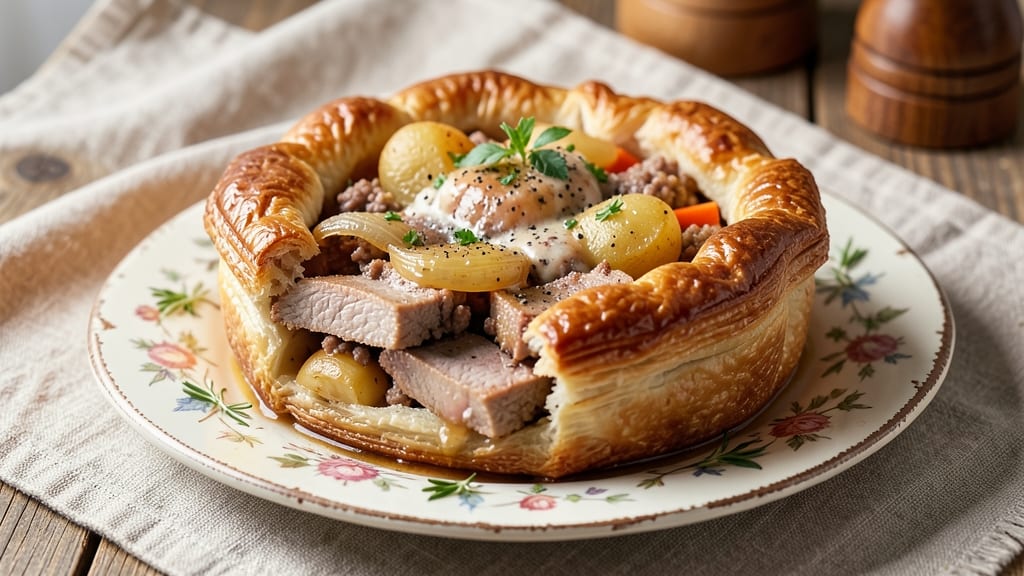
This flaky pork pie tourtière brings classic Quebecois comfort to your kitchen with its tender, spiced meat filling and golden crust. 🌟 I first perfected this recipe after years of studying traditional techniques in Montreal butcher shops—where the secret lies in slow-cooked pork and a crust that shatters like autumn leaves.
The filling alone transforms tough cuts into melt-in-your-mouth perfection, while the crust holds its shape even when sliced. What makes this tourtière special is the balance of textures: the tender pork, soft potatoes, and aromatic spices wrapped in a buttery crust that's crisp enough to cut with a fork.
I use a mix of ground pork and pork shoulder for depth of flavor, seasoned with cinnamon, cloves, and nutmeg—just enough warmth to complement the savory meat without overpowering it. The crust comes together with simple ingredients but requires patience to achieve that signature flakiness.
By the time it emerges from the oven, you'll have a pie that looks like it belongs in a Parisian pâtisserie but tastes like home. The filling stays moist and flavorful, the crust is golden and crisp, and every bite delivers that perfect harmony of spice and savory richness.
This is the kind of dish that makes Sunday dinners worth waiting for. Serve with a side of gravy or pickled vegetables to complete the meal. The leftovers? Even better the next day. Let's get started on this timeless classic.
Ingredients for pork pie tourtiere
Here's what you'll need to create a tender, spiced pork pie that tastes like home.
| Ingredient | Amount | Notes |
|---|---|---|
| Pork Shoulder 🥩 | 2 lb | Cut into 1-inch cubes |
| Ground Pork 🥩 | 1 lb | For texture variation |
| Russet Potatoes 🥔 | 2 medium | Peeled and diced small |
| Onion 🧅 | 1 medium | Diced finely |
| Carrots 🥕 | 2 medium | Peeled and sliced thin |
| All-Purpose Flour 🌾 | 3 cups | For crust and thickening |
| Unsalted Butter 🧈 | 1 cup | Cold and cubed for crust |
| Ice Water 💧 | ½ cup | For dough elasticity |
| Ground Cinnamon 🌿 | 1 tbsp | Sweet and aromatic |
| Ground Cloves 🌶️ | ½ tsp | Freshly ground preferred |
| Ground Nutmeg 🌶️ | ½ tsp | Freshly grated |
| Salt 🧂 | 2 tsp | Kosher or sea salt |
| Black Pepper 🌶️ | 1 tsp | Freshly ground |
| Garlic Cloves 🧄 | 4 cloves | Minced finely |
| Beef Stock 💧 | 1 cup | For moisture |
The pork shoulder is your secret weapon here—it stays juicy while the ground pork adds that perfect bite. Ask your butcher for a well-marbled cut if you're buying whole; the fat renders down beautifully. I usually grab mine from Costco for the best price, but any grocery store has it. For the potatoes, Russets are a must—they hold their shape when diced small. If you're short on time, microwave them 5 minutes first to soften before cooking. The carrots can be baby carrots if that's what's in the fridge, but I prefer the sweetness of fresh.
No beef stock? Chicken stock works too, though it'll be slightly lighter. Fresh spices make all the difference—Penzeys or the bulk bins at Whole Foods are great for cinnamon and nutmeg. If you're feeling fancy, toast the spices in a dry pan for 30 seconds to deepen the flavor. The onions and garlic? Sauté them first until translucent—this builds so much flavor. For the crust, don't skip the ice water; it keeps the butter from melting too fast and makes that signature flaky texture. And if you're worried about the crust being too rich, use half butter, half vegetable shortening for a lighter version.
This pie tastes even better the next day—trust me, the flavors meld perfectly. Store leftovers in the fridge for 4-5 days, covered tightly. For freezing, wrap the whole pie in foil and it'll keep for 3 months. Reheat at 350°F until warmed through. I always make a double batch because it disappears fast—perfect for potlucks or meal prep. The crust reheats beautifully, so you won't lose that crisp texture.
Why You'll Love This Recipe
- One-Pot Magic: I swear by this—just chop potatoes, onions, and carrots into rough chunks (no peeling needed if you're lazy), toss them in with the pork, and let it slow-cook. The meat practically falls apart, and the veggies melt into creamy perfection without any extra bowls or pans.
- Deep, Savory Soul: That slow-cooked pork shoulder? It turns tender enough to shred with a fork, while the ground pork adds a rich, meaty texture. The onions caramelize just enough to give it a sweet, umami depth—like a hug in a pie crust, honestly.
- Budget-Friendly Feast: You’re getting two cuts of pork (shoulder for flavor, ground for texture), plus hearty veggies that stretch every dollar. It’s the kind of meal that makes you feel like you’re feeding a houseful of people without breaking the bank—my wallet thanks me every time.
Step-by-step instructions for pork pie tourtiere
Here's how to build a showstopping tourtiere with a golden crust and spiced meat filling.
🍳 Step 1: Sauté the Meat and Vegetables
In a large Dutch oven, heat 1 tablespoon of the unsalted butter over medium-high heat. Add the 2 lb pork shoulder cut into 1-inch cubes and cook for 5 minutes until browned on all sides. Remove and set aside.
In the same pot, add the remaining 1 cup unsalted butter and melt. Add the 1 medium onion and 2 medium carrots sliced thin, cooking for 5 minutes until softened. Add the 2 medium russet potatoes diced small and cook for another 3 minutes.
Return the pork to the pot along with the 1 lb ground pork, 4 cloves garlic minced finely, 1 tbsp ground cinnamon, 0.5 tsp ground cloves, 0.5 tsp ground nutmeg, 2 tsp salt, and 1 tsp black pepper. Stir well and cook for 5 minutes until the spices are fragrant and the ground pork is cooked through.
🥘 Step 2: Build the Filling and Prepare the Crust
Pour the 1 cup beef stock into the Dutch oven and bring to a simmer. Reduce heat to low and let it cook uncovered for 1 hour until the liquid reduces by half and the meat is tender. You want the filling to be moist but not soupy.
While the filling simmers, prepare the crust. In a large bowl, combine the 3 cups all-purpose flour and 1 tsp salt. Cut in the 1 cup cold unsalted butter using a pastry cutter or your fingers until the mixture resembles coarse crumbs. Gradually add the 0.5 cup ice water and mix just until the dough comes together.
Divide the dough into two equal portions. Roll one portion into a 12-inch circle to fit the top of your Dutch oven. Roll the second portion into a slightly larger circle for the bottom crust.
🔥 Step 3: Assemble and Bake the Tourtiere
Preheat your oven to 375°F. Line a baking sheet with parchment paper. Spread the bottom crust over the baking sheet, then transfer the Dutch oven with the filling to the crust. Spoon the meat mixture into the Dutch oven, pressing down lightly.
Place the top crust over the filling, sealing the edges by pinching them together. Trim any excess dough. Cut a few small slits in the top crust to allow steam to escape. Brush the top crust with a little beaten egg (optional) for extra shine.
Transfer the assembled tourtiere to the oven and bake for 45-50 minutes until the crust is deep golden brown and the filling is bubbling. For the flakiest crust, bake on the middle rack where heat circulates evenly.
⏰ Step 4: Rest and Serve
Remove the tourtiere from the oven and let it rest for 15-20 minutes before serving. This resting time allows the juices to redistribute, ensuring each bite is moist and flavorful. The crust should be crispy and golden, while the filling will be rich and aromatic with tender meat.
Slice into wedges and serve warm. The combination of the flaky crust, spiced meat, and tender vegetables makes this tourtiere a showstopper for any gathering. Store leftovers in the refrigerator for up to 3 days or freeze for longer storage.
Pro Tips For Making Pork Pie Tourtiere
- Boil Potatoes First: I learned this the hard way—peeling and mashing raw russets into the filling leads to a gummy, gluey mess. Boil them until fork-tender, drain well, then mash with a splash of cold water or milk to mimic the texture of store-bought pie filling. The starch binds better, and the final tourtière stays moist even after baking.
- Brown the Pork Twice: The ground pork gets overlooked, but crisping it in batches over medium-high heat makes a real difference. After browning the shoulder cubes, push them aside, add the ground pork, and cook until deeply browned—this adds layers of flavor that plain cooking won’t. (Yes, it takes 10 extra minutes, but your pie will taste like it.)
- Salt the Meat Overnight: Skip the crowding—pork shoulder needs time to absorb salt for tender, juicy slices. Toss it with 1–2 teaspoons of kosher salt per pound and let it sit uncovered in the fridge for at least 4 hours (or overnight). This isn’t just about seasoning; it’s about breaking down fibers so the meat stays fork-tender after hours of baking.
- Use a Meat Thermometer: I was skeptical until I tried it—tourtière filling can look done but still be pale and undercooked inside. Pull the pork shoulder at 195°F (203°F for extra-safe eating) and the filling at 160°F. Resting under foil for 15 minutes after baking lets juices redistribute, so you won’t end up with a dry crust and a soggy center. (Your future self will thank you.)
Serving suggestions for this recipe
Classic Gravy Pairing
No tourtière is complete without a rich gravy to soak up every last bite. I make a simple beef gravy by deglazing the Dutch oven after removing the meat filling with ½ cup red wine and 1 cup beef stock.
Simmer for 10 minutes until thickened, then season with ½ tsp thyme and salt to taste. A splash of Worcestershire sauce adds depth. 🍷
For extra richness, whisk in 2 tbsp cold butter at the end—this creates a velvety finish that feels luxurious. Serve gravy in a small pitcher so guests can drizzle it over their slices.
If you prefer a lighter option, use chicken stock instead of beef, but the flavor won’t be as robust.
Pickled Vegetable Contrast
Pickled vegetables cut through the richness of the tourtière beautifully. I love quick-pickled red cabbage with apple cider vinegar, sugar, and mustard seeds—just 1 cup vinegar, 2 tbsp sugar, and 1 tsp mustard seeds simmered for 5 minutes with thinly sliced cabbage.
Let it cool for 30 minutes before serving. 🥬
For a more traditional touch, try pickled carrots or radishes—both add a bright, tangy crunch. Store-bought pickles work in a pinch, but homemade always tastes fresher. Serve them on the side or even on top of the pie for a pop of color.
Crusty Bread for Soaking
A baguette or sourdough loaf is perfect for soaking up extra filling and gravy. I recommend French bread from a local bakery—its crisp crust and soft interior make it ideal. Toast it lightly before serving to enhance its texture. 🥖
For a heartier option, try cheesy pull-apart bread—just brush slices with garlic butter and sprinkle with Parmesan cheese before baking. The combination of the buttery crust and cheesy pull-apart bread with tourtière is a crowd-pleaser.
Seasonal Side Dishes
In fall, serve tourtière with roasted Brussels sprouts tossed in maple glaze—just 2 tbsp maple syrup, 1 tbsp balsamic vinegar, and a pinch of salt. Roast at 400°F for 20 minutes until caramelized. 🍂
For summer, swap in a cucumber and herb salad with feta cheese, dill, and a lemon vinaigrette. The cool, fresh flavors balance the richness of the pie. In winter, mashed potatoes with sour cream and chives add comfort.
Dessert Pairing
End the meal with a Quebec classic: tarte au sucre (sugar pie) or crème brûlée. The sweetness of these desserts complements the savory-spiced flavors of the tourtière perfectly. 🍰
For a simpler option, serve vanilla ice cream with warm maple syrup drizzled on top. The contrast of hot and cold is always satisfying, and it’s a great way to cleanse the palate after a rich meal.
Nutrition facts
Frequently asked questions
Can I make this tourtière without a Dutch oven?
A deep pie dish or even a 9x13-inch baking dish will work just fine. Just transfer the filling to your chosen dish before adding the bottom crust. The baking time may increase by 10-15 minutes since the sides won't conduct heat as efficiently as a Dutch oven.
What's the secret to getting a flaky crust?
The key is cold butter and minimal handling of the dough. Cut the butter into the flour until it resembles coarse crumbs, then add just enough ice water to hold it together. Overworking the dough makes it tough, so mix gently. Also, let the dough rest for 30 minutes before rolling.
Can I make this tourtière ahead of time?
This pie actually improves overnight! Assemble it completely, then refrigerate for 12-24 hours before baking. The flavors meld beautifully. For make-ahead convenience, you can also prepare the filling and crust separately, refrigerate them, then assemble and bake when ready.
What's the best way to reheat leftovers?
For the best results, reheat slices in a 350°F oven for 10-15 minutes until warmed through. Microwaving works in a pinch (cover with a damp paper towel for 1-2 minutes), but the crust won't be as crisp. If reheating the whole pie, wrap it in foil and bake at 325°F for 30 minutes.
Can I substitute beef for the pork?
Traditionally, this is a pork dish, but you could use beef chuck or ground beef in a pinch. The flavor will be slightly different, though, as pork has a more delicate taste. If substituting, reduce the cooking time by 10-15 minutes since beef cooks faster than pork.