
Main Courses
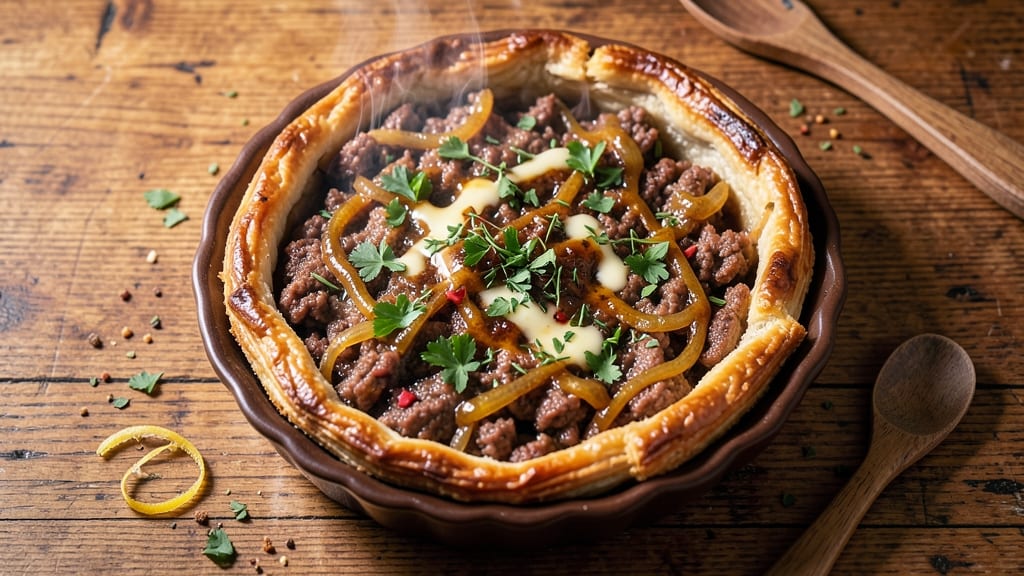
This French Canadian pork pie recipe delivers the perfect balance of flaky pastry and rich, savory meatball filling that tastes like a taste of Quebec.
After years of perfecting this dish, I've developed a method that ensures the crust stays crisp and golden while the filling remains juicy and packed with traditional flavors. The secret lies in the slow-cooked meatballs infused with mustard and herbs, wrapped in a buttery, layered pastry that's impossible to resist.
The filling begins with ground pork combined with mustard, onions, and herbs—a classic French Canadian touch that adds depth without overpowering the natural meat flavor. While the meatballs simmer in a light gravy, the pastry gets its signature flakiness from layers of cold butter folded into the dough.
This technique, passed down through generations, ensures every bite of the crust delivers that satisfying melt-in-your-mouth texture.
What makes this recipe truly special is how it brings French Canadian tradition to your home kitchen. The meatballs stay tender and flavorful, while the pastry achieves that perfect golden-brown finish with a crisp exterior.
Served with a side of tangy pickles or a dollop of mustard sauce, this pie becomes the centerpiece of any meal—whether it's a family gathering or a cozy weeknight dinner.
With just a few hours of hands-on time and some patience for the dough to rest, you'll have a dish that tastes like it came straight from a Quebecois bistro.
The aroma alone will have everyone gathering around the table, and the first bite will prove why this recipe has become a beloved classic. Let's get started on creating your own taste of French Canadian comfort.
Ingredients for pork pie recipe french canadian
The heart of this French Canadian pork pie lies in its traditional meatball filling and buttery pastry layers.
| Ingredient | Amount | Notes |
|---|---|---|
| Ground Pork 🐷 | 1 ½ lb | Freshly ground preferred |
| Yellow Onion 🧅 | 1 whole | Medium size, finely chopped |
| Dijon Mustard 🍯 | 2 tbsp | High-quality for authentic flavor |
| Fresh Thyme Leaves 🌿 | 1 tbsp | Or 1 tsp dried thyme |
| Fresh Parsley 🌿 | ¼ cup | Chopped, for garnish |
| Unsalted Butter 🧈 | 1 cup | Cold, cubed for pastry |
| All-Purpose Flour 🌾 | 3 ½ cups | Plus 1 tbsp for dusting |
| Ice Water 💧 | ½ cup | For dough elasticity |
| Salt 🧂 | 1 ½ tsp | Fine sea salt preferred |
| Black Pepper 🌶️ | ½ tsp | Freshly ground preferred |
| Heavy Cream 🥛 | ½ cup | For gravy richness |
| Beef Stock 🍲 | 1 cup | Low-sodium preferred |
| Egg 🥚 | 1 whole | For egg wash |
| Granulated Sugar 🍚 | 1 tbsp | For pastry brushing |
The ground pork is non-negotiable—freshly ground from the butcher counter delivers the best texture. For the onions, yellow onions from the grocery store's fresh produce section work perfectly, but avoid sweet onions as they can overpower the dish. Dijon mustard is essential for that authentic French Canadian tang—Maille or Amora are my go-to brands, but any quality Dijon will do. Fresh thyme and parsley elevate the flavor profile significantly, but dried herbs in half the amount work in a pinch. The butter should be cold and cubed when mixing into the pastry dough for maximum flakiness.
No Dijon mustard? Whole-grain mustard thinned with a splash of water works in a bind. Fresh herbs unavailable? Dried thyme and parsley at one-third the amount maintain the flavor profile. For the pastry, King Arthur or Gold Medal flour ensures a tender crust. If you're short on butter, vegetable shortening at the same weight keeps the pastry flaky, though it lacks the rich flavor. The beef stock can be swapped for chicken stock or even vegetable stock for a vegetarian-friendly version, though it will alter the depth of flavor slightly.
Store the pastry dough wrapped in plastic for up to 2 days in the fridge, or freeze for 3 months for future use. The meatball filling can be prepped ahead and refrigerated for 3 days before baking. For best results, assemble the pie the day you plan to bake it—this allows the filling to meld with the pastry overnight. Any leftovers keep well in the fridge for 4 days, though reheating in a 350°F oven for 15 minutes ensures the crust stays crisp.
Why You'll Love This Recipe
- One-Pot Magic: I swear by this recipe when I’m too tired to scrub pots. Brown the pork right in the same skillet you’ll use to cook it—no extra dishes, just a quick wipe-down. That Dijon mustard does the heavy lifting, tying everything together while you stir.
- Umami Bomb: The combo of ground pork and caramelized onions? Chef’s kiss. But here’s the secret: a splash of Dijon mustard brightens it up, and those thyme leaves add this earthy warmth that makes it taste like a bistro dish. I’ll be real—my picky husband goes back for seconds.
- Leftover Hero: This keeps perfectly for days, which is huge when you’re meal prepping. Toss it into wraps, over toast, or even in a quick pasta sauce. Honestly, I’ve eaten it cold straight from the fridge—no judgment.
- Budget-Friendly Feast: Ground pork stretches far, and onions/thyme are cheap staples. You’re getting restaurant-quality flavor without breaking the bank. Plus, it’s the kind of dish that makes you feel fancy without trying. (Yes, even on a Tuesday night.)
Step-by-step instructions for French Canadian pork pie
Achieving that legendary flaky crust and rich meatball filling requires precision—here's how to nail both.
Prepare the Meatball Filling
In a large mixing bowl, combine the 1.5 lb ground pork, 1 whole yellow onion (finely chopped), 2 tbsp Dijon mustard, 1 tbsp fresh thyme leaves, 0.5 tsp black pepper, and 1.5 tsp salt. Using your hands, mix gently until just combined—overworking the meat will make it tough. The mixture should hold together when pressed but still feel slightly loose.
Roll the mixture into 12 equal-sized meatballs (about 1.5 inches in diameter). I like to wet my hands slightly with water to prevent sticking. Place them on a parchment-lined plate and refrigerate while you prepare the pastry. This chilling step ensures the meatballs stay compact during baking.
Make the Flaky Pastry Dough
Cut the 1 cup unsalted butter into ½-inch cubes and place in the freezer for 10 minutes to firm up. In a food processor, combine the 3.5 cups all-purpose flour and 1.5 tsp salt, then pulse to blend. Add the cold butter cubes and pulse again until the mixture resembles coarse crumbs with pea-sized butter pieces.
With the processor running, gradually add the 0.5 cup ice water until the dough just comes together when pressed. The dough should be cold and slightly shaggy—don't overmix. Divide it into two equal portions, flatten into discs, wrap in plastic, and refrigerate for 30 minutes. This resting period relaxes the gluten for maximum flakiness.
Assemble the Pork Pie
Preheat your oven to 375°F. Roll out one pastry disc on a lightly floured surface into a 12-inch circle (about ⅛-inch thick). Transfer to a 9-inch pie dish, pressing gently to fit. Trim any excess dough hanging over the edges.
Arrange the 12 meatballs in a single layer in the pie dish, leaving ½-inch between each. In a small bowl, whisk together the 1 cup beef stock, 0.5 cup heavy cream, and 1 tbsp granulated sugar. Pour this mixture evenly over the meatballs—it'll create a rich gravy during baking.
Seal and Bake to Perfection
Roll out the second pastry disc and cut into a 1-inch wide strip for the crust. Brush the edges of the bottom crust with the 1 whole egg (beaten), then place the pastry strip around the edge to form a seal. Trim any excess and crimp with a fork. Cut 4 small slits in the center to allow steam to escape.
Brush the top crust with the remaining egg wash and bake for 45-50 minutes until the pastry is deep golden brown and the filling reaches 165°F internally. The meatballs should be tender but not falling apart. If the crust browns too quickly, tent with foil for the last 15 minutes of baking.
Rest and Serve
Remove the pie from the oven and let it rest for 15 minutes before serving. This resting period allows the juices to redistribute, ensuring each bite is moist and flavorful. Garnish with the 0.25 cup fresh parsley just before serving for a pop of color and freshness.
The result should be a flaky, golden crust encasing tender meatballs in a rich, slightly sweet gravy. Serve warm with crusty bread to soak up every last drop of that savory sauce.
Pro Tips For Making Pork Pie Recipe French Canadian
- Fry the Pork Low and Slow: I used to rush this and end up with dry, rubbery meat—don’t do that. Once the onions are soft and golden, drop the heat to medium-low and cook the pork for 10-12 minutes, stirring occasionally. You’re not searing here; you’re rendering fat and building flavor.
- Finely Dice That Onion: Skip the rough chop—this isn’t a stir-fry. Dice the yellow onion into tiny, even pieces (about 1/8-inch) so it melts into the pork instead of sitting as chunks. I learned this the hard way when I had to pick out onion bits from my first batch.
- Don’t Overmix the Mustard: Stir the Dijon mustard in just until combined—maybe 10 seconds. Overworking it turns the filling into a paste, and you’ll lose that tender, crumbly texture. Think "marbled" not "homogenized."
- Toast the Herbs First: Chop the thyme leaves (not stems) and parsley, then dry-toast them in the same pan with the onions for 30 seconds before adding the pork. It deepens their flavor and cuts through the richness of the ground meat—trust me, it makes a real difference.
Best sauces and condiments for this pork pie recipe french canadian
Classic Mustard Gravy
This tangy gravy is the soul of French Canadian pork pie, balancing the richness of the meatballs with bright Dijon mustard. Simmer 1 cup beef stock, ½ cup heavy cream, 2 tbsp Dijon mustard, and 1 tbsp cornstarch (slurry) for 5 minutes until thickened.
I like to add a pinch of white pepper for depth—it's subtle but elevates the flavor. Serve it ladled over the pie or drizzled alongside for dipping. 🍽️
Sweet Maple Glaze
For a touch of Quebec charm, brush the top crust with a mix of 2 tbsp pure maple syrup and 1 tsp butter before baking. The caramelized edges create a stunning contrast to the savory filling.
I use Grade A Dark maple syrup from local farmers markets for that authentic, robust flavor. Add it in the last 15 minutes of baking to prevent burning.
Herb Butter Sauce
Melt ¼ cup unsalted butter with 1 tbsp fresh thyme, 1 tbsp fresh parsley, and ½ tsp garlic powder until fragrant. Drizzle this over the pie just before serving for a fresh, aromatic finish.
This sauce works wonders as a side dip too—perfect for soaking up any leftover gravy. I keep the heat low to preserve the herbs' vibrant flavors.
Spicy Pickle Relish
Mix ½ cup dill pickles (chopped), 2 tbsp sour cream, 1 tsp yellow mustard, and a pinch of cayenne pepper for a tangy contrast. This relish cuts through the richness of the pie and adds a crunchy texture.
I like to serve it on the side for those who enjoy a bit of heat. Store any leftovers in an airtight container for up to 3 days in the fridge.
Creamy Horseradish Sauce
Whisk together ½ cup sour cream, 1 tbsp prepared horseradish, 1 tsp lemon juice, and a pinch of salt for a bold, creamy accompaniment. This sauce adds a sharp kick that pairs beautifully with the pork.
I adjust the horseradish to taste—some prefer it milder, while others love the full heat. Serve chilled for the best texture. ❄️
Nutrition facts
Frequently asked questions about French Canadian pork pie
Why does the recipe call for Dijon mustard instead of regular mustard?
Dijon mustard provides that signature French Canadian tang and depth that regular mustard lacks. The finer texture and slightly sweeter flavor integrate perfectly with the pork, creating a more complex filling. If you're in a pinch, you can substitute with whole-grain mustard thinned with a splash of water, but the flavor won't be quite the same.
Can I make this pork pie ahead of time?
The filling can be prepped and refrigerated for up to 3 days before baking. For the pastry, you can make the dough 2 days ahead and store it wrapped in plastic in the fridge. The best approach is to assemble the pie the day you plan to bake it—this allows the filling to meld with the pastry overnight for optimal flavor.
What's the secret to getting a flaky crust?
The key lies in keeping everything cold and using cold butter. The butter should be cubed and chilled before mixing into the dough, and the dough itself should rest in the fridge for 30 minutes before rolling. This relaxes the gluten and creates those signature flaky layers. Never skip the resting time—it makes all the difference!
Is there a vegetarian option for this recipe?
While traditional pork pie uses meat, you can adapt the recipe by substituting the pork with a mix of mushrooms, lentils, and walnuts for texture. Use vegetable stock instead of beef stock, and keep the same seasoning profile. The pastry will still be delicious, though the flavor profile will be more earthy than the original meat version.
How do I prevent the meatballs from falling apart?
Undercooking or overmixing the meatball mixture are the most common causes. Make sure your meatballs reach an internal temperature of 165°F when done. Also, handle the meat mixture gently—just combine the ingredients until they're just mixed, then roll the meatballs with wet hands to prevent sticking. Chilling them before baking helps them hold their shape too.