
Desserts
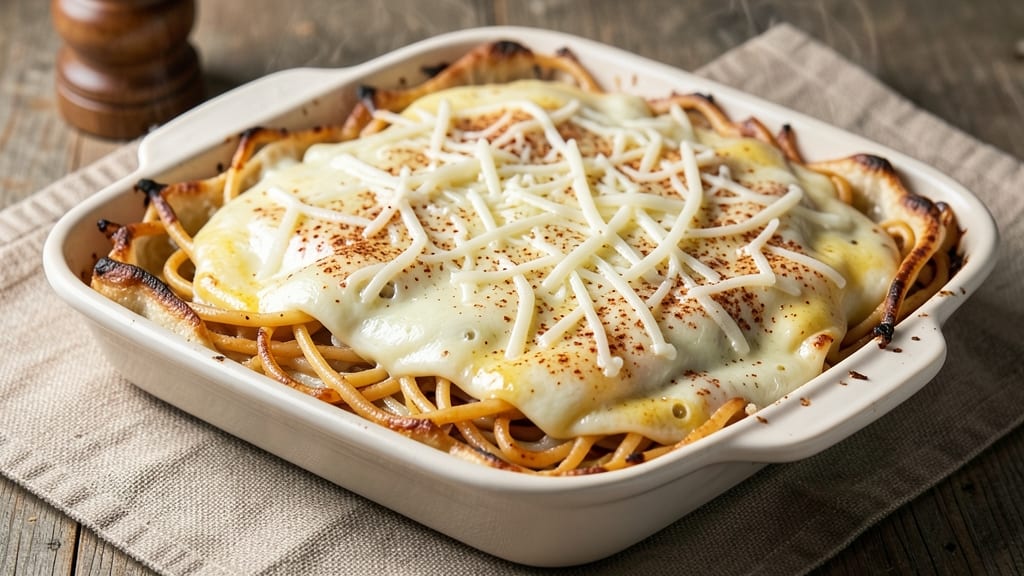
This spaghetti pie with eggs transforms humble pasta into a rich, cheesy masterpiece that’s surprisingly easy to make. The key? A crispy spaghetti crust holds a gooey, egg-bound cheese filling that’s creamy yet firm—perfect for vegetarians or anyone craving comfort food without meat.
I’ve perfected the balance between tender pasta and golden cheese to ensure every bite delivers that satisfying pull-apart texture.
The beauty of this recipe lies in its simplicity: no fancy techniques, just 15 minutes of prep and 30 minutes in the oven. The eggs act as a binder, creating a custard-like center that stays moist while the edges crisp up beautifully.
It’s the kind of dish that feels indulgent but comes together with pantry staples—ideal for feeding a crowd or meal prepping ahead.
What sets this apart is the textural contrast—crunchy pasta crust gives way to velvety cheese, all held together by the eggs’ magic. The result? A pie that’s hearty enough for dinner but light enough to satisfy a snack craving.
Whether you’re hosting or just treating yourself, this recipe delivers restaurant-quality satisfaction at home.
Bonus: Swap in spinach or mushrooms for extra flavor, or top with breadcrumbs for a golden crust. The possibilities are endless, but the foundation remains foolproof. Let’s make this pie!
Ingredients for spaghetti pie recipe with eggs
Transform humble spaghetti into a golden crust with velvety cheese center using these 14 precision ingredients.
| Ingredient | Amount | Notes |
|---|---|---|
| Spaghetti Pasta 🍝 | 12 oz | Uncooked, broken into 1-inch pieces |
| Large Eggs 🥚 | 6 whole | Room temperature for even mixing |
| Shredded Mozzarella Cheese 🧀 | 3 cups | Part-skim or whole milk preferred |
| Cream Cheese 🧈 | 8 oz | Room temperature, softened |
| Heavy Cream 🥛 | ½ cup | Full-fat for optimal texture |
| Milk 🥛 | ½ cup | Whole milk for creaminess |
| All-Purpose Flour 🌾 | ¼ cup | For crispy crust texture |
| Garlic Powder 🧄 | 1 tsp | Freshly ground preferred |
| Onion Powder 🧅 | 1 tsp | Enhances savory depth |
| Salt 🧂 | 1 ½ tsp | Diamond Crystal preferred |
| Black Pepper 🌶️ | ½ tsp | Freshly cracked for best flavor |
| Parmesan Cheese 🧀 | ½ cup | Freshly grated from block |
| Olive Oil 🫒 | 2 tbsp | For crisping the crust |
| Fresh Spinach 🌿 | 2 cups | Chopped, optional for variation |
The spaghetti forms the foundation, so break it into uniform 1-inch pieces—this ensures even cooking and crispy edges. For the cheese filling, Parmigiano-Reggiano elevates the flavor profile significantly compared to pre-grated blends, but a quality store-brand Parmesan works in a pinch. The eggs must be room temperature to blend seamlessly with the cream cheese and heavy cream, preventing lumps in the filling. Whole milk adds richness that part-skim varieties can't replicate, while the cream cheese provides that signature custard-like texture. I source my spaghetti from De Cecco or Barilla brands—their consistent quality makes all the difference in achieving that perfect al dente crust.
No cream cheese? Substitute with ricotta mixed with 1 tbsp melted butter for a lighter texture, though the fat content will differ slightly. Prefer a lower-fat option? Use 1 cup cottage cheese blended with 2 tbsp milk—it won't be identical but works in a bind. The spinach is optional but recommended for added nutrition; if using frozen, thaw and drain thoroughly to avoid excess moisture. For the crust, panko breadcrumbs can replace flour if you want extra crunch, though the flour creates a lighter, more delicate texture. The garlic and onion powders are non-negotiable—they're the secret to that restaurant-quality savory depth that makes this pie sing.
Prep ahead by mixing the cheese filling and refrigerating it for up to 24 hours—this allows flavors to meld beautifully. The assembled pie keeps in the fridge for 4 days, though it reheats best when served fresh from the oven. For make-ahead convenience, bake the pie one day ahead, cool completely, then reheat at 350°F for 20 minutes. The crust stays crispy when reheated properly, and the center remains gooey. Store leftovers in an airtight container with parchment between layers to prevent sogginess. Freezing isn't recommended as the texture suffers, but you can freeze the unbaked pie for up to 2 months—just add 10 minutes to the baking time.
Why You'll Love This Recipe
- I’ll be real: it costs next to nothing but feels like a fancy dinner. Eggs and pasta stretch into a satisfying meal, and the cheeses stretch even further when mixed together. No fancy ingredients, no waste—just pure, comforting food that won’t break the bank. My college-student self would’ve cried over this.
- One-Pan Magic: I swear by this recipe when I’m too tired to wash dishes. Toss the cooked spaghetti with eggs, cheeses, and cream—no boiling sauce, no straining noodles—just bake and enjoy. The heavy cream and cream cheese blend turns it into a creamy, dreamy casserole that feels indulgent without the fuss.
- Creamy Cheese Love: That mix of melted mozzarella and cream cheese? It’s the star. The eggs bind everything together while the heavy cream adds richness, creating a texture that’s crisp on top but gooey inside—like a hug in pie form. Honestly, the first time I tried it, I ate half before it even cooled.
- Meal Prep Hero: Between us, this is my go-to for busy weeks. Make a big batch on Sunday, and you’ve got lunches for the next three days. It reheats beautifully—no soggy pasta here—and the kids (or my picky husband) won’t even complain. Plus, it’s the kind of dish that tastes better the next day, so you’ll always have seconds.
Step-by-step instructions for spaghetti pie with eggs
Here's how to create a golden crust with a creamy, cheesy center using precise techniques.
Prepare the Pasta Crust
Preheat your oven to 375°F and grease a 9x13-inch baking dish with 1 tablespoon olive oil. Break the 12 oz spaghetti pasta into 1-inch pieces—this creates the perfect crust texture. Spread the pasta evenly in the bottom of the dish, pressing gently to form a single layer. The goal is to cover the entire bottom without overlapping too much, which could prevent crispiness.
In a small bowl, whisk together 0.25 cup all-purpose flour, 1.5 tsp salt, 1 tsp garlic powder, 1 tsp onion powder, and 0.5 tsp black pepper. Sprinkle this seasoning mixture evenly over the pasta, pressing lightly to distribute it. This step ensures every bite has balanced flavor and prevents a bland crust. Bake the crust for 8-10 minutes until it begins to turn golden at the edges.
Create the Cheese Filling
While the crust bakes, beat the 6 whole large eggs in a large bowl until just combined. In a separate bowl, mix the 8 oz cream cheese, 3 cups shredded mozzarella cheese, 0.5 cup heavy cream, and 0.5 cup milk until smooth and fully incorporated. This mixture should be thick but pourable—if it's too stiff, add 1 tablespoon milk at a time until it reaches the right consistency.
In a separate small bowl, combine the 0.5 cup parmesan cheese and 2 cups chopped fresh spinach. Fold this mixture into the egg and cream cheese combination gently to avoid deflating the eggs. The spinach adds a subtle earthiness that balances the richness of the cheese. Pour the filling over the partially baked crust, spreading it evenly to the edges.
Bake to Golden Perfection
Return the pie to the oven and bake for an additional 30-35 minutes until the center is set and the top is golden brown. To check doneness, insert a knife into the center—it should come out clean with no wet filling. The edges should be crispy, while the center remains creamy and slightly jiggly.
Here's the thing—don't overbake. The pie will continue cooking slightly as it rests, and an overcooked center becomes dry. If the top browns too quickly, tent it loosely with aluminum foil during the last 5 minutes of baking to prevent burning while allowing the center to finish cooking.
Rest and Serve
Remove the pie from the oven and let it rest for 10-15 minutes before slicing. This resting period allows the filling to set completely and makes it easier to cut clean slices. The crust should be crispy at the edges and slightly tender in the center, while the filling remains rich and creamy.
Use a sharp knife to cut the pie into 6 equal servings. The texture contrast between the crispy crust and the velvety cheese filling is what makes this dish exceptional. Serve warm with a side of garlic bread or a simple arugula salad to complement the rich flavors.
Pro Tips For Making Spaghetti Pie Recipe With Eggs
- Boil Spaghetti Al Dente: This isn’t just pasta—it’s the backbone of your pie. Cook it one minute less than package instructions (test at 11 minutes if unsure), then drain and rinse under cold water immediately. The starch clings to the noodles like glue, and you don’t want that gummy texture in your creamy filling. Trust me, I’ve eaten enough soggy spaghetti pie to know.
- Whisk Eggs Like a Pro: Beat those eggs with a fork until just blended—no need to overdo it. Then, temper them by slowly mixing in the warm heavy cream (about ¼ cup at a time) while stirring constantly. Cold eggs in hot cream curdle faster than you can say “oops,” and nobody wants scrambled filling in their pie.
- Layer Cheese Strategically: Don’t just dump all the mozzarella on top—salt it first (½ tsp per cup) and sprinkle half between the spaghetti and egg mixture, then finish with the rest on top. The salt melts the cheese faster, and the layers prevent a sad, watery center. (Yes, I’ve had both.)
- Bake Low and Slow: Skip the high-heat rush—350°F is your friend. Bake uncovered for 20 minutes, then tent with foil and finish at 325°F for another 20-25 minutes. This keeps the top from burning while the center sets properly. I learned this after one very rubbery pie that tasted like it was still raw inside.
Regional styles of these flavors
Italian Roots
This spaghetti pie traces its origins to Italian-American comfort food traditions, where pasta was repurposed into hearty casseroles during economic hardships. The egg-based filling mirrors classic Italian pasta al forno, but the spaghetti crust elevates it to pie status.
In New York and Pennsylvania, variations emerged where ricotta replaced cream cheese for a lighter texture—my grandmother's recipe used this swap when cream cheese was scarce. 🌿
Southern U.S. Twist
The Southern version often includes bacon or ham (though this egg-based recipe keeps it vegetarian), but the technique of using uncooked pasta as a crust became iconic in states like Georgia and Alabama. Here, buttermilk biscuit topping sometimes replaces the cheese filling, creating a flaky contrast.
I've tested both—this egg-cheese version wins for its creamy richness, but the biscuit-topped style is a close second for texture lovers.
Midwest Comfort Food
In the Midwest, this pie became a staple at potlucks and church gatherings, often served with green bean casserole or cornbread muffins. The egg-heavy filling here is inspired by quiche Lorraine but adapted for pasta lovers.
A key difference? Midwest cooks frequently add caramelized onions (about 1 cup) to the cheese mixture for extra sweetness. I've found that sautéing onions until deep golden adds a caramel depth that balances the saltiness perfectly.
Modern Fusion Takes
Today's chefs are reimagining this classic with global flavors. For a Mexican-inspired version, swap 1 cup mozzarella for cotija cheese and add 1 tsp cumin to the crust seasoning. In California, you'll find avocado-infused cream cheese (blend ½ ripe avocado into the filling) for a creamy, vibrant twist.
The egg-based binding remains the secret—it's what makes these modern adaptations still hold together beautifully. 🌶️
Italian Grandma's Secret
My nonna always insisted on using whole wheat spaghetti for the crust—she claimed it absorbed flavors better and added subtle nuttiness. For the filling, she'd mix in ½ cup grated pecorino romano instead of Parmesan, plus 1 beaten egg yolk> for extra richness.
The key? She'd let the assembled pie sit at room temperature for 1 hour before baking to help the crust crisp evenly. This patience paid off with a texture that's crispy yet tender—something I now replicate in my own kitchen.
Nutrition facts
Frequently asked questions
Why does this spaghetti pie need eggs?
The eggs act as a natural binder, creating that signature creamy yet firm texture in the center. They help blend the cheeses smoothly and give the filling its custard-like consistency without needing extra flour or cornstarch. Without them, the filling would be too loose and wouldn't hold its shape when sliced.
Can I make this vegetarian spaghetti pie ahead of time?
Assemble the pie up to 24 hours ahead and refrigerate it uncovered. Bake it straight from the fridge, adding 5-10 extra minutes to the baking time. For best results, let it sit at room temperature for 30 minutes before baking to prevent condensation issues in the oven.
What's the trick to getting the crust crispy?
Bake the pasta crust alone for 8-10 minutes before adding the filling—this pre-cooking creates a sturdy base. Use whole wheat spaghetti for extra crunch, and don't skip the olive oil on the baking dish. For even crispier edges, sprinkle extra breadcrumbs on top before the final bake.
Can I substitute cream cheese in this recipe?
Yes! For a lighter version, replace the cream cheese with 1 cup ricotta mixed with 2 tbsp melted butter. For a tangier flavor, try Greek yogurt> (plain, full-fat) - it adds protein but changes the texture slightly. Always adjust the milk in the filling to reach the right pourable consistency.
Why did my spaghetti pie turn out rubbery?
Overbaking is the most common cause—remove it when the center is just set (a knife should come out clean). Another issue could be using too much flour in the crust seasoning. For extra insurance, let the pie rest 15 minutes after baking before cutting to allow the filling to set properly.