
Main Courses
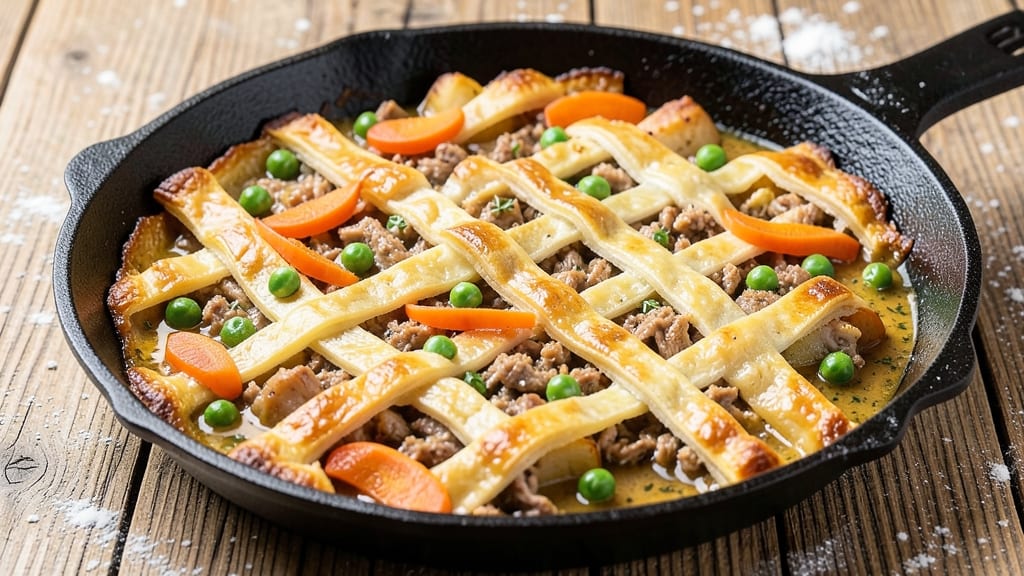
This skillet turkey pot pie recipe delivers all the comfort of classic pot pie with the convenience of one-pan cooking.
The secret lies in browning ground turkey for deep flavor before layering it with tender vegetables and a rich gravy—all topped with a golden, flaky homemade crust that crisps to perfection in the skillet.
I developed this method after years of testing, ensuring every bite delivers juicy turkey, vibrant veggies, and a crust that shatters with each spoonful.
The beauty of this recipe is its simplicity: no rolling dough or multiple pans required. You'll start by cooking the turkey in the same skillet used for baking, locking in those savory flavors.
The vegetables—carrots, peas, and potatoes—soften just enough to blend seamlessly with the turkey and gravy, while the crust gets its signature crispness from a quick egg wash before baking. The result? A restaurant-quality pot pie with minimal effort.
What makes this skillet version special is how the crust transforms during baking—golden, bubbling edges that contrast beautifully with the creamy filling inside. The turkey stays juicy, the vegetables retain their color, and the gravy thickens just enough to coat everything perfectly.
This is the kind of dish that feels indulgent yet comes together in under an hour, making it ideal for weeknight dinners or holiday gatherings.
Serve it with a side salad or crusty bread to soak up every last bit of gravy. For variations, swap the crust for a gluten-free option or adjust the herbs to suit your taste—this recipe adapts easily without sacrificing flavor. Let's get started on this comforting, foolproof skillet pot pie.
Ingredients for skillet turkey pot pie
Juicy turkey, tender veggies, and a crispy homemade crust—all in one skillet for perfect pot pie.
| Ingredient | Amount | Notes |
|---|---|---|
| Ground Turkey 🦃 | 1 ½ lb | 93% lean, finely ground |
| Russet Potatoes 🥔 | 2 medium | Peeled and thinly sliced |
| Carrots 🥕 | 3 medium | Peeled and sliced into rounds |
| Frozen Peas 🌱 | 1 cup | Thawed and drained |
| All-Purpose Flour 🌾 | 1 ½ cups | For crust and gravy |
| Unsalted Butter 🧈 | ½ cup | Cold, cubed for crust |
| Heavy Cream 🥛 | ½ cup | Full-fat for richness |
| Chicken Broth 💧 | 1 ½ cups | Low-sodium preferred |
| Large Eggs 🥚 | 1 whole | For egg wash |
| Salt 🧂 | 1 ½ tsp | Kosher or sea salt |
| Black Pepper 🌶️ | ½ tsp | Freshly ground |
| Garlic Powder 🧄 | ½ tsp | Freshly ground preferred |
| Dried Thyme 🌿 | ½ tsp | Or 1 tsp fresh thyme |
| Olive Oil 🫒 | 2 tbsp | For browning turkey |
The ground turkey is the foundation—93% lean gives you the right balance of flavor and moisture. Costco or Trader Joe's usually have it pre-ground, but if you're buying whole turkey breasts, grind them yourself for the freshest texture. Look for bright red color and avoid any with grayish tint. The potatoes should be firm and free of sprouts—Russets are ideal because they hold their shape during baking. Carrots? Bright orange and crisp when sliced—skip the pre-shredded kind, it gets mushy.
No heavy cream? Half-and-half works in a pinch, though the texture won't be quite as rich. Short on chicken broth? Vegetable broth with a splash of cream keeps it flavorful. Fresh thyme is ideal but dried at one-third the amount works fine. The flour matters too—King Arthur or Bob's Red Mill brands give the best crust texture. For the crust, cold butter is non-negotiable—cut it into tiny cubes so it distributes evenly. Pre-sliced potatoes or carrots? Use them—they save time without sacrificing quality.
This pot pie reheats beautifully—350°F for 15 minutes gets it crispy again. Store leftovers in an airtight container for 3-4 days or freeze for up to 3 months. For make-ahead prep, assemble the filling and crust up to a day ahead, then bake when ready. The crust keeps best if chilled 30 minutes before baking—prevents shrinking. Portion into individual skillets for easy reheating later.
Why You'll Love This Recipe
- One-Pan Magic: I swear by this recipe when I’m too tired to wash a million dishes. Brown the turkey, dump in the veggies and flour slurry, and let it all thicken into a golden, bubbling mess—no pie dish, no fuss. The potatoes get fork-tender while the crusty top forms right in the skillet.
- Savory Umami Bomb: Ground turkey adds that deep, meaty richness, but it’s the flour roux that steals the show—it turns the broth into a velvety, slightly nutty sauce that clings to every bite. Add a pinch of thyme or smoked paprika, and suddenly, it’s the kind of dish that makes you slow down mid-bite.
- Leftover Hero: This recipe doubles as tomorrow’s lunch without any extra effort. The filling thickens beautifully when reheated, and I always save half for my daughter’s school lunch—she doesn’t even notice it’s not store-bought. Honestly, it’s the kind of meal that tastes better the second time around.
- Budget-Friendly Flex: Russets and carrots stretch a long way, and frozen peas cut costs without sacrificing texture. I make this when I’m pinching pennies, but it still feels special—like a cozy hug in a skillet. Plus, the flour crust uses pantry staples, so you’re not running to the store for fancy ingredients.
Step-by-step instructions for skillet turkey pot pie
Here's how to create a restaurant-quality pot pie with tender turkey, flavorful vegetables, and a golden crust—all in one skillet.
🍳 Step 1: Brown the Ground Turkey and Sauté Vegetables
Heat a large oven-safe skillet over medium-high heat and add the 2 tablespoons olive oil. Once hot, add the 1.5 pounds ground turkey, breaking it up with a wooden spoon. Cook until the turkey loses its pink color and is fully browned—about 5-6 minutes. This step develops deep flavor through the Maillard reaction.
Remove the turkey from the skillet and set it aside. In the same skillet, add the 2 medium peeled and sliced russet potatoes, 3 medium peeled and sliced carrots, 0.5 teaspoon garlic powder, and 0.5 teaspoon dried thyme. Cook for 5-6 minutes until the vegetables begin to soften slightly. You want them to retain some texture—they'll finish cooking later.
🥘 Step 2: Build the Creamy Filling
Reduce the heat to medium-low and add the 1.5 cups chicken broth to the skillet, scraping up any browned bits from the bottom. Stir in the 0.5 cup heavy cream and 1.5 teaspoons salt, then return the turkey to the skillet. Bring the mixture to a gentle simmer and cook for 5 minutes to let the flavors meld.
Add the thawed and drained 1 cup frozen peas and the 0.5 teaspoon black pepper. Stir well to combine, then remove the skillet from heat. The filling should be thick but still sauce-like—if it's too thick, add a splash of water or broth to reach your desired consistency. Let it cool slightly for 5 minutes before proceeding.
👨🍳 Step 3: Prepare the Crust Mixture
In a medium bowl, whisk together the 1.5 cups all-purpose flour and 0.5 teaspoon dried thyme. Cut in the 0.5 cup cold unsalted butter using a pastry cutter or your fingers until the mixture resembles coarse crumbs with pea-sized butter pieces. Add the 1 whole large egg and mix until the dough comes together. It should be slightly sticky but hold its shape when pressed.
Spread the crust mixture evenly over the filling in the skillet, pressing down gently with your fingers or the back of a spoon. Use a fork to create a decorative edge if desired, but don't worry about perfection—the crust will crisp up beautifully in the oven. The crust should completely cover the filling, leaving no gaps.
🔥 Step 4: Bake Until Golden and Bubbly
Preheat your oven to 375°F. Place the skillet in the center rack and bake for 25-30 minutes until the crust is deep golden brown and the filling is bubbling around the edges. The crust should be crispy on top while the filling underneath remains creamy and tender.
To test doneness, gently press the crust with a fork—it should spring back slightly. If the top browns too quickly but the edges need more color, cover the crust loosely with aluminum foil for the last 5-10 minutes of baking. The filling should be hot and the crust should be golden and slightly puffed.
⏰ Step 5: Rest and Serve
Remove the skillet from the oven and let the pot pie rest for 5-10 minutes before serving. This resting period allows the filling to set slightly and makes it easier to slice. The crust will retain its crispiness while the filling stays creamy and flavorful.
Slice the pot pie into wedges and serve immediately. Each bite should deliver tender turkey, sweet potatoes, and carrots in a rich, creamy sauce topped with a perfectly crisp crust. The combination of homemade crust and flavorful filling makes this skillet pot pie a comforting, satisfying meal that's perfect for any occasion.
Pro Tips For Making Skillet Turkey Pot Pie
- Cook turkey first: Brown the ground turkey until it’s no longer pink, then drain almost all the fat—just leave about a teaspoon in the pan. That little bit of fat keeps the potatoes from sticking later, and it adds depth to the whole dish. (Yes, even if you’re the type who skips browning, do it here.)
- Par-cook the potatoes: Cut the russets into even 1-inch chunks and boil them for 5 minutes before adding them to the skillet. This cuts down on total cooking time and keeps them from turning to mush in the sauce. I learned this the hard way after serving a pot pie with sad, waterlogged potatoes.
- Don’t overmix the crust: When you stir in the flour to thicken the sauce, mix just until it’s smooth—no need to overwork it. Overmixing makes the crust gummy, and nobody wants that. A few small lumps? Doesn’t matter. Taste as you go.
- Use cold butter for the crust: Cut 2 tablespoons of cold butter into the flour mixture for the crust, then toss it with a fork until it looks like coarse crumbs. Cold butter creates flaky layers, and skipping this step means you’ll end up with a tough, dense top. (Your future self will thank you.)
Wine and beer pairings for these flavors
Red Wine Classics
A Pinot Noir from Oregon or California is my go-to pairing for this pot pie—its bright acidity and red fruit notes (think cherry and raspberry) cut through the richness of the cream sauce while complementing the savory turkey.
Look for a bottle with 12-14% ABV and moderate tannins to avoid overpowering the dish. I love La Crema or Domaine Serene for their balance of earthiness and fruitiness. 🍷
Crisp White Options
For those who prefer white wine, a Chardonnay with subtle oak (like Kendall-Jackson Vintner's Reserve) adds a creamy texture that mirrors the pot pie's filling. The wine's buttery notes enhance the crust's richness without clashing.
If you prefer something lighter, try a Sauvignon Blanc from New Zealand—its citrus and herbal notes provide a refreshing contrast to the hearty flavors. 🥂
Beer Pairings
A honey-brown ale like New Belgium Fat Tire or Allagash White brings malty sweetness that balances the pot pie's savory depth. The beer's caramel and vanilla notes complement the crust, while its effervescence cleanses your palate between bites.
For a lighter option, a pilsner (like Pilsner Urquell) offers crispness that highlights the dish's fresh peas and carrots. 🍺
Non-Alcoholic Choices
Don't overlook sparkling apple cider—its effervescence and slight tartness make it a fantastic non-alcoholic match. For something richer, try a ginger beer (like BrewDog Ginger Beer) to add a zesty kick that contrasts beautifully with the creamy filling. Both options keep the meal feeling special without alcohol. 🍏
After-Dinner Digestion
If you're serving dessert afterward, save your wine for the main course and switch to a dessert wine like Moscato d'Asti or a Port for the finale. The sweetness of these wines complements the meal's richness while preparing your palate for something sweeter. 🍰
Nutrition facts
Frequently asked questions
Can I use a different protein instead of ground turkey?
Ground chicken works beautifully with the same texture and flavor profile. For a richer taste, try ground beef (80/20 lean-to-fat ratio)—just reduce the cooking time slightly to avoid over-browning. If you prefer white meat, diced chicken breast works too, but pat it dry first and sear it until golden before adding other ingredients.
How do I make this recipe gluten-free?
Replace the all-purpose flour with a 1:1 gluten-free baking flour blend (like Bob's Red Mill) and use gluten-free rolled oats if your blend requires it. For the crust, add 1 tablespoon xanthan gum to help bind the dough. The filling remains unchanged, so the flavor stays the same—just the crust adapts.
Why is my crust soggy after baking?
Soggy crusts usually happen when the filling is too wet or the crust isn't pre-baked. Let the filling cool 10 minutes before adding the crust to reduce steam. For extra insurance, sprinkle 1/4 cup crushed cornflakes or gluten-free breadcrumbs on the filling before adding the crust. Also, ensure your oven rack is in the center for even heat distribution.
Can I prepare this ahead of time?
Yes! Assemble the filling and crust up to 24 hours ahead, then refrigerate uncovered. Bake straight from the fridge (add 5-10 extra minutes to baking time). For freezing, bake first, then cool completely. Wrap tightly in foil and freeze for up to 3 months. Reheat at 350°F for 15 minutes to restore crispiness.
What's the best skillet size for this recipe?
Use a 10-inch oven-safe skillet for the perfect balance of surface area and depth. If your skillet is too small (8-inch), the crust may spread unevenly. For larger groups, use a 12-inch skillet and double the recipe—just increase baking time by 5-7 minutes to ensure even cooking. Cast iron or stainless steel work best for even heat distribution.