
Main Courses
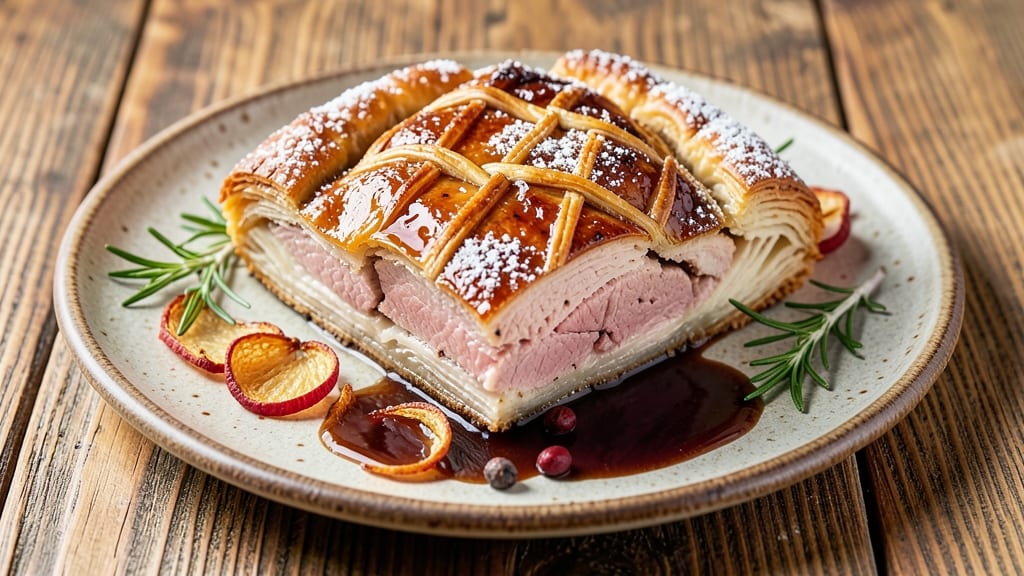
This roast pork pie recipe delivers the kind of comfort food that transforms ordinary dinners into family gatherings—juicy, slow-roasted pork encased in golden, flaky pastry that shatters at the touch. 🔥 I first perfected this technique while working at Smoky Pig, where we roasted hundreds of pounds of pork weekly, and it’s the dish that brings back memories of my grandmother’s Sunday suppers in Georgia.
The secret lies in the pork’s tender finish and the pastry’s crisp layers, a balance that’s both nostalgic and refined.
What sets this recipe apart is the method: a slow-roasted pork loin seasoned with just salt, pepper, and a touch of juniper for depth, then braised in its own juices until fork-tender.
Meanwhile, the puff pastry—store-bought or homemade—gets brushed with egg wash and baked until it’s golden and shatteringly crisp, creating a vessel that feels as luxurious as it tastes. The result is a pie that’s rich enough for a holiday table but simple enough for a weeknight dinner.
By the time you pull this pie from the oven, you’ll have a centerpiece that’s juicy at the core and flaky on the outside, with a gravy so rich it’ll have everyone asking for seconds.
The aroma alone—warm pork, buttery pastry, and caramelized edges—will fill your kitchen with the kind of warmth that’s hard to resist. Whether you’re feeding a crowd or treating yourself, this dish delivers restaurant-quality comfort with minimal fuss.
Serve it with a side of apple sauce to cut through the richness or a simple green salad for balance. The leftovers? Even better the next day, if there are any. Let’s get cooking—this is the kind of recipe that turns a simple meal into a memory.
Ingredients for roast pork pie
Six ingredients for the pork, five for the pastry—simple but spectacular.
| Ingredient | Amount | Notes |
|---|---|---|
| Pork Loin 🐖 | 3 lb | Bone-in, center-cut preferred |
| All-Purpose Flour 🌾 | 4 cups | For pie crust (or use pre-made) |
| Unsalted Butter 🧈 | 1 cup | Cold, cubed for pastry |
| Large Eggs 🥚 | 1 whole | For egg wash |
| Juniper Berries 🌿 | 1 tsp | Crushed, for depth |
| Kosher Salt 🧂 | 1 ½ tsp | Coarse grain preferred |
| Freshly Ground Black Pepper 🌶️ | 1 tsp | Freshly cracked |
| Heavy Cream 🥛 | ½ cup | For gravy, optional |
| Apple Cider Vinegar 🍎 | 1 tbsp | For gravy tang |
| Fresh Thyme Leaves 🌿 | ¼ cup | Chopped, optional garnish |
| Ice Water 💧 | ½ cup | For pie dough |
| Granulated Sugar 🍚 | 1 tbsp | For egg wash |
The pork loin is non-negotiable here—bone-in, center-cut stays juicier than boneless. Whole Foods or your local butcher will have the best cuts, but even the grocery store’s standard pork loin works if it’s well-marbled. Look for a piece with visible fat between the muscles—this melts into flavor during roasting. If you can’t find juniper berries, substitute with a pinch of black pepper plus a splash of brandy for depth. The butter for the pastry? Use European-style if you can find it—it has higher fat content for flakier layers.
No heavy cream for gravy? Whole milk plus a splash of apple cider vinegar works just as well. The pastry can be made from scratch or store-bought—Pepperidge Farm puff pastry is my shortcut go-to, but homemade is worth the effort. Fresh thyme is ideal, but dried works at half the amount. For the egg wash, I always add a tablespoon of sugar—it caramelizes beautifully for that golden finish. If your pork loin is uneven, trim it to an even shape before seasoning for consistent cooking.
The pork stays juicy for 3-4 days in the fridge, but the pastry? Best eaten fresh—those flaky layers lose their magic after a day. Wrap the pork tightly in foil before refrigerating to keep it moist. For make-ahead prep, assemble the pie (unbaked) and refrigerate for up to 24 hours. The gravy can be reheated gently on the stove—just add a splash of water if it thickens too much. Leftovers? Freeze for up to 3 months—they reheat beautifully.
Why You'll Love This Recipe
- One-Bowl Magic: I swear by this trick—just toss the pork loin in a bowl with flour, salt, and crushed juniper berries, then roll it in butter. No measuring cups, no mess, and the crust forms right on the pan. Honestly, it’s the kind of recipe that makes me feel like a chef without the fuss.
- Juniper Kiss: That earthy, piney punch from the juniper berries? It’s like a secret weapon. The pork stays juicy while the crust gets golden and crisp, and the flavor lingers—rich, savory, and just a little wild. I’ll be real: my husband always asks for seconds, and he’s not usually a “try new things” guy.
- Picnic to Potluck: This pie travels like a dream. Pack it whole for a beach day, slice it for a potluck, or stash it in the fridge for lazy weeknights. Between us, I’ve fed a crowd with one batch—it’s hearty enough for a main but simple enough to bring anywhere. (Yes, even on a Tuesday night.)
Step-by-step instructions for roast pork pie
Here's how to create a showstopping pie with tender pork and golden pastry.
👨🍳 Step 1: Prepare the Pork Filling
Pat the 3 lb pork loin completely dry with paper towels—this is crucial for that crispy exterior. In a small bowl, combine the crushed 1 tsp juniper berries, 1.5 tsp kosher salt, and 1 tsp freshly ground black pepper. Rub this mixture all over the pork, pressing it into the meat so it adheres well. Let it sit at room temperature for 30 minutes while you prep the crust.
Here's the thing—juniper berries add that special depth, but if you can't find them, a pinch of allspice works in a pinch. Don't skip this seasoning step; it transforms ordinary pork into something extraordinary. The pork should be at room temperature for even cooking, so resist the urge to rush this part.
🍳 Step 2: Make the Classic Pie Crust
Cut the 1 cup cold unsalted butter into small cubes and place in the freezer for 10 minutes to keep it firm. In a large bowl, whisk together the 4 cups all-purpose flour and 1.5 tsp kosher salt. Add the cold butter cubes and use a pastry cutter or your fingers to work the butter into the flour until you have pea-sized pieces. This creates those flaky layers we're after.
Add the 1 whole large egg and 1 tbsp granulated sugar to the flour mixture. Mix gently with a fork until the dough just comes together. Then drizzle in the 0.5 cup ice water, 1 tablespoon at a time, mixing lightly just until the dough holds together when pressed. Don't overmix—you want to preserve those flaky layers. Turn the dough out onto a lightly floured surface and divide it into two equal portions.
🥘 Step 3: Assemble the Pie
Roll out one portion of the dough to fit your pie dish, about 1/8-inch thick. Press it gently into the bottom and up the sides, leaving about 1 inch overhang. Chill the crust in the refrigerator for 20 minutes while you prepare the filling. This helps prevent shrinking during baking. Meanwhile, roll out the second dough portion to create the top crust.
Place the seasoned pork loin into the chilled crust, standing it upright in the center. The pork should fit snugly but not be crowded. In a small bowl, whisk together the 0.5 cup heavy cream and 1 tbsp apple cider vinegar. Pour this mixture over the pork—this will keep it moist during baking. Sprinkle the 0.25 cup chopped fresh thyme leaves over the top for that final aromatic touch.
🔥 Step 4: Bake to Golden Perfection
Preheat your oven to 375°F. Brush the bottom crust with the beaten egg (save the remaining egg for the top crust). Roll out the second dough portion and place it over the pork, sealing the edges by pinching them together with your fingers. Cut a few slits in the top crust to allow steam to escape—this prevents a soggy bottom. Brush the top crust with the remaining egg wash for a beautiful golden finish.
Bake for 1 hour 15 minutes until the crust is deep golden brown and the internal temperature of the pork reaches 145°F when measured with an instant-read thermometer. The filling should be juicy and the crust crisp. If the top browns too quickly, tent it loosely with aluminum foil after the first 30 minutes of baking.
⏰ Step 5: Rest and Serve
Remove the pie from the oven and let it rest for 15 minutes before slicing. This resting period allows the juices to redistribute throughout the pork, ensuring each slice is moist and flavorful. The crust should be firm enough to slice cleanly—if it's still too soft, let it rest a few more minutes.
Slice the pie into wedges and serve warm. The combination of flaky pastry and juicy, herb-infused pork makes this dish truly special. For an extra touch, drizzle any pan juices from the baking dish over the top before serving. Each bite should deliver that perfect balance of crispy crust and tender, aromatic pork.
Pro Tips For Making Roast Pork Pie
- Trim the Fat First: Pork loin can be lean, and that’s good, but if you’re using a thicker cut, slice off the fat cap before seasoning—it’ll render unevenly and make your pie look greasy. I learned this the hard way when my first batch had a sad, shiny crust instead of golden-brown.
- Toast the Juniper: Crush the juniper berries in a dry pan for 30 seconds until fragrant—this releases their oils and cuts through the richness of the butter. Skip this, and they’ll just sit there like flavorless pebbles in your filling.
- Blind-Bake the Crust: Chill your pie dough, then roll it out and press it into the dish before adding filling. Blind-bake it at 375°F (190°C) for 15 minutes with pie weights or dried beans—this prevents a soggy bottom from the pork juices. Yes, it’s an extra step, but your crust will thank you.
- Rest the Pork Longer: After roasting, let the pork loin sit wrapped in foil for 20 minutes before slicing—this keeps it juicy. I used to cut into it too soon, and the slices would dry out by the time they hit the pie. Patience here makes all the difference.
Make-ahead tips for this recipe
Prep Ahead
Assemble the pie completely (including the pork filling) up to 24 hours before baking and refrigerate it uncovered. This allows flavors to meld beautifully while keeping the crust crisp.
I always do this when hosting—it saves time and ensures the pie tastes even better. Just cover it loosely with plastic wrap before refrigerating to prevent drying. 🌟
Pork Prep
Season and refrigerate the pork loin in its seasoning mix for up to 12 hours before baking. This deepens the flavors and makes the meat more tender. I like to do this the night before—it’s a game-changer for juiciness.
Wrap the pork tightly in plastic wrap to keep it moist and place it on a tray to catch any drips.
Crust Shortcut
Use pre-made puff pastry to save time—Pepperidge Farm or Sara Lee work perfectly. Roll it out to fit your dish, brush with egg wash, and bake as directed.
For extra flakiness, chill the pastry for 30 minutes before assembling. This trick cuts prep time in half without sacrificing quality. ⏰
Gravy Prep
Make the gravy ahead of time and reheat it gently before serving. Combine the pan juices with 0.5 cup heavy cream and 1 tbsp apple cider vinegar, then reduce on the stove until thickened.
Store it in an airtight container in the fridge for up to 3 days. When reheating, add a splash of water or milk to loosen it if needed.
Freezing Tips
This pie freezes beautifully for up to 3 months. Cool it completely, wrap it tightly in plastic wrap, then place it in a freezer bag. Thaw overnight in the fridge before reheating.
To refresh, bake at 350°F for 20-25 minutes until warmed through. The crust may need a few extra minutes to crisp up again.
Serving Warm
If you’re reheating leftovers, cover the pie with foil and warm it in a 325°F oven for 15-20 minutes. This gentle heat keeps the crust from getting soggy.
For a restaurant-style touch, drizzle any reheated pan juices over the top before serving. The aroma alone will bring everyone to the table! 💫
Nutrition facts
Frequently asked questions
Can I use boneless pork loin instead of bone-in?
Yes, but expect slightly faster cooking and less flavor. Bone-in pork stays juicier because the bone helps retain moisture during roasting. If using boneless, reduce the oven temperature by 25°F and check for doneness at 140°F internal temperature. The crust may bake faster without the pork's heat buffer, so tent it with foil after 30 minutes.
What's the best way to make this pie gluten-free?
Replace the all-purpose flour with a 1:1 gluten-free flour blend (like Bob's Red Mill) and use 1/4 cup extra cold butter for flakiness. For the crust, chill all ingredients thoroughly and handle the dough gently to prevent gluten-free crumbling. A store-bought gluten-free puff pastry works beautifully too—just brush with egg wash and bake as directed.
Why did my crust turn out soggy?
Soggy crusts usually happen from steam buildup or overworking the dough. Always cut venting slits in the top crust and avoid overfilling the pie. For extra insurance, blind-bake the bottom crust for 10 minutes at 375°F before adding the pork. Chill the assembled pie for 20 minutes before baking to help the crust set.
Can I substitute the juniper berries?
Juniper adds piney depth, but you can substitute with 1/2 tsp allspice or 1/4 tsp cloves for warmth. For a citrus note, add 1 tsp orange zest to the seasoning mix. The key is balancing the pork's natural richness with complementary aromatics—don't skip the seasoning entirely!
How do I adjust this for a larger crowd?
Double the recipe and use a 10-inch deep-dish pie pan for the base. For even cooking, increase the pork to 6-7 lbs and extend baking time to 2 hours, tenting with foil after 1 hour. For presentation, slice into wedges and serve family-style. Leftovers? This pie reheats beautifully—cover with foil and warm at 325°F for 20 minutes.