
Main Courses
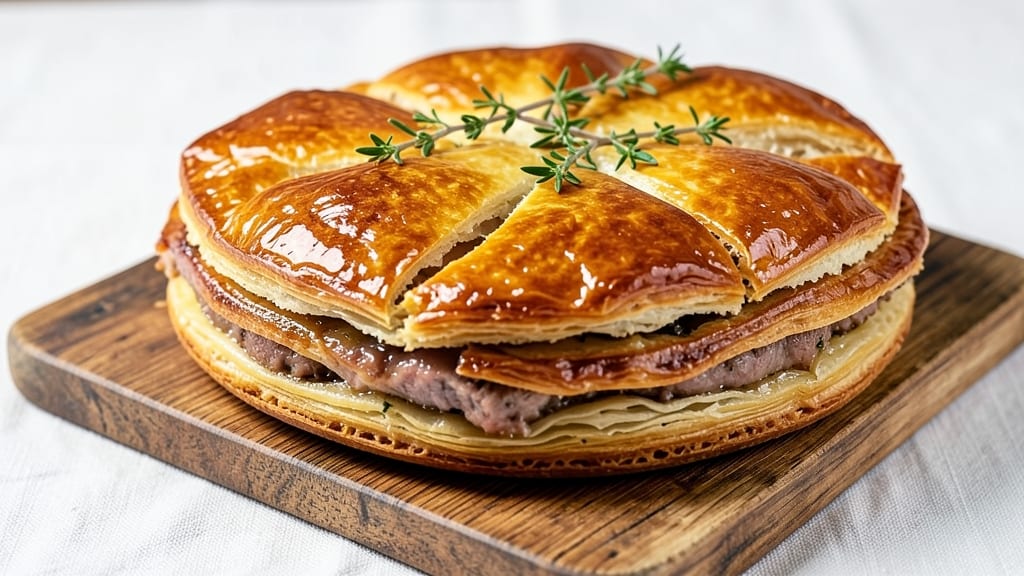
This raised pork pie recipe brings the heart of Southern tradition to your kitchen with layers of flaky pastry and rich, herb-infused pork. 💛 I remember my grandmother's kitchen always smelling of freshly baked pies, and this version captures that same warmth—just with a modern touch.
The secret lies in the pastry's lift, achieved through a precise blend of lard and butter that creates those signature raised edges, while the pork filling simmers until tender, infused with thyme and bay leaves.
The filling starts with a simple but essential technique: browning the pork before simmering it in a rich gravy with aromatic herbs. This deepens the flavor, ensuring every bite is packed with savory depth.
Meanwhile, the pastry gets its signature lift from a well-proportioned fat mixture and careful rolling, which gives you that iconic dome shape. The result is a pie that looks as impressive as it tastes—golden, crisp, and perfectly raised.
By the time it emerges from the oven, you'll have a pie with a flaky, buttery crust that practically melts in your mouth and a filling so rich and tender it falls apart at the touch of a fork.
The steam tray method ensures that raised lid stays perfectly shaped, while the crimped edges add that professional touch. This isn't just a pie; it's a centerpiece that will have everyone asking for seconds.
Serve it with a tangy mustard sauce, sweet apple sauce, or classic pickles to cut through the richness. The contrast of flavors makes each bite even more satisfying.
Whether you're hosting a holiday gathering or simply craving a taste of home, this raised pork pie delivers the comfort and elegance of a classic dish with a modern twist.
Ingredients for raised pork pie
Six ingredients for the filling, six for the pastry—just like Grandma used to say.
| Ingredient | Amount | Notes |
|---|---|---|
| Pork Shoulder 🥩 | 3 lb | Bone-in for flavor, cut into 1-inch pieces |
| All-Purpose Flour 🌾 | 4 cups | For pastry, plus extra for dusting |
| Unsalted Butter 🧈 | ½ cup | Cold, cubed, for pastry |
| Lard 🧈 | ½ cup | For flaky layers, chilled |
| Ice Water 💧 | ½ cup | For pastry dough |
| Fresh Thyme 🌿 | 2 tbsp | Leaves only, chopped fine |
| Fresh Bay Leaves 🍃 | 2 whole | Removed after cooking |
| Onion 🧅 | 1 whole | Yellow, finely diced |
| Garlic Cloves 🧄 | 4 cloves | Minced, for filling |
| Beef Stock 🥫 | 2 cups | Homemade or quality store-bought |
| Whole Milk 🥛 | ½ cup | For gravy richness |
| Allspice Berries 🌶️ | 1 tsp | Crushed, for depth |
| Ground Black Pepper 🌶️ | 1 tsp | Freshly ground preferred |
| Salt 🧂 | 2 tsp | Kosher preferred, adjust to taste |
| Egg Wash 🥚 | 1 whole | Beaten egg for brushing |
The pork shoulder is non-negotiable here—bone-in for that deep, slow-cooked flavor. Look for well-marbled cuts at Whole Foods or your local butcher shop. If you're buying pre-cut, ask for pieces roughly 1-inch in size. The pastry's secret? That mix of lard and butter—lard for flakiness, butter for richness. I always buy leaf lard from the butcher case, not the pre-packaged kind. For the flour, King Arthur or Gold Medal are my go-tos—high protein for that perfect lift.
No lard on hand? Substitute all butter, but expect slightly less flakiness. Fresh thyme is ideal, but dried works at half the amount if you're in a pinch. The beef stock should be rich—Homemade is best, but Kitchen Basics or Swanson are solid store-bought options. Allspice berries? They're the secret weapon—if you can't find them, ground allspice at one-third the amount works. The pastry dough needs to be cold when rolled, so chill it for at least 30 minutes before shaping.
The pork filling keeps beautifully for 3 days in the fridge—perfect for prepping ahead. The pastry dough can be made a day in advance and stored wrapped in plastic. For the final assembly, keep everything cold until ready to bake. This pie reheats best at 350°F for 15 minutes—just cover loosely with foil to prevent over-browning. Leftovers? Store in an airtight container for 4 days or freeze for 3 months. Trust me, it tastes even better the next day.
Why You'll Love This Recipe
- No-Fuss Dough Magic: I’ll be real—this raised pie crust is so much easier than rolling out store-bought. Just toss the flour, lard, and butter with ice water, cut in the fat until it crumbles like sand, then fold it together. No rolling pins, no stress, and that flaky, airy top? Worth every five minutes of mixing.
- Pork Shoulder Perfection: That slow-cooked pork shoulder falls apart at the touch of a fork, and the crust? It’s got this buttery, crispy edge that holds up to anything—sauces, gravies, even just a sprinkle of salt. Honestly, the combo of tender meat and that golden crust makes me want to eat it straight out of the oven.
- Weeknight Workhorse: Between us, this pie is my go-to for game days, potlucks, or when I’m too tired to think. The dough keeps well in the fridge, and the filling? It reheats like a dream. I’ve even packed it for lunch—yes, even on a Tuesday.
- Budget-Friendly Feast: Pork shoulder is cheap, and this recipe stretches it into a meal that feeds four (or five if you’re me). The lard in the crust adds richness without breaking the bank, and leftovers? They’re just as good the next day, reheated in the oven. Solid. Reliable. My secret weapon for stretching groceries.
Step-by-step instructions for raised pork pie with flaky pastry
Here's how to build a showstopping pork pie with layers of melt-in-your-mouth pastry.
👨🍳 Step 1: Make the Pastry Dough for Maximum Flakiness
In a large bowl, combine the 4 cups all-purpose flour with 2 tsp salt. Cut in the 0.5 cup cold cubed unsalted butter and 0.5 cup chilled lard using a pastry cutter or your fingers until the mixture resembles coarse crumbs with pea-sized fat pieces. This is crucial—don't overwork it or you'll develop gluten and lose that delicate flakiness.
Gradually add the 0.5 cup ice water, 1 tablespoon at a time, mixing gently with a fork until the dough just comes together. The ice water is key here—it keeps the fat cold and prevents the dough from becoming tough. Turn the dough onto a lightly floured surface and knead just until smooth (about 30 seconds). Wrap tightly in plastic and refrigerate for 30 minutes while you prepare the filling.
🥘 Step 2: Build the Savory Pork Filling
In a large skillet over medium heat, cook the 1 whole finely diced onion until softened and translucent (about 5 minutes). Add the 4 cloves minced garlic and cook for 30 seconds until fragrant. This is where the flavors start to meld—don't rush this step or you'll burn the garlic.
Transfer the onion mixture to a large bowl and add the 3 lb cut pork shoulder in 1-inch pieces. Sprinkle with 2 tbsp chopped fresh thyme, 2 whole fresh bay leaves (whole so they can be removed later), 1 tsp crushed allspice berries, 1 tsp freshly ground black pepper, and 2 tsp salt. Toss everything together until the pork is well coated. The spices will infuse into the meat as it cooks, creating deep flavor.
🍳 Step 3: Cook the Pork and Make the Gravy
In the same skillet (no need to clean it—the browned bits add flavor), brown the pork pieces over medium-high heat for 8-10 minutes, turning occasionally. Once browned, remove the pork and set aside. Add 2 cups beef stock to the skillet and scrape up all those delicious browned bits from the bottom. Bring to a simmer and let it reduce by half.
Return the pork to the skillet along with the reduced stock. Cover and simmer over low heat for 1 hour, stirring occasionally, until the pork is fork-tender. Remove the bay leaves and transfer the pork mixture to a bowl. Stir in the 0.5 cup whole milk to create a rich gravy. The milk adds body and balances the savory flavors beautifully.
🥘 Step 4: Assemble the Pie for Perfect Rise
Preheat your oven to 375°F. Roll out about ⅔ of the pastry dough on a floured surface to fit a 9-inch pie dish, leaving a 1-inch overhang on all sides. Press the dough gently into the dish, making sure it's evenly distributed. Here's the thing—don't press too hard or you'll shrink the pastry as it bakes.
Transfer the pork filling to the pastry-lined dish, spreading it evenly. Roll out the remaining ⅓ of the pastry dough to create a lid. Brush the edges of the bottom crust with the 1 whole egg wash and place the lid on top, pressing the edges together to seal. Cut a few small slits in the top to allow steam to escape. This prevents a soggy bottom while still giving you that classic pie shape.
🔥 Step 5: Bake to Golden Perfection
Place the pie on a baking sheet (to catch any drips) and bake in the preheated 375°F oven for 50-60 minutes, until the pastry is deep golden brown and the filling is bubbling through the slits. The pastry should be crisp and flaky, not pale or doughy. If the top starts browning too quickly, tent it loosely with foil to prevent burning.
Let the pie rest for 15 minutes before slicing—this allows the filling to set and prevents it from running out. The result should be a beautiful, raised pie with layers of flaky pastry and rich, savory pork filling. Serve warm with a simple green salad and you've got a showstopping centerpiece that's sure to impress.
Pro Tips For Making Raised Pork Pie
- CHILL THE FAT FIRST: Before mixing lard and butter into your dough, let that fat sit out for 10 minutes—just until it softens like cold butter, not melted. I used to skip this and ended up with a greasy, gummy mess that wouldn’t hold its shape. Your crust will thank you with a proper flaky layer.
- SEAR THE PORK SHOULDER: Brown the pork shoulder in batches over medium-high heat before braising—don’t rush it. Those caramelized edges are the flavor foundation for your pie filling. I learned this the hard way when I skipped it and the meat tasted bland, no matter how long I cooked it.
- DON’T OVERWORK THE DOUGH: Handle the dough just enough to combine—overmixing develops gluten and makes it tough. Use a light touch, especially when folding in the ice water. I’ve ruined plenty of pies by kneading like I was making bread, and the result was chewy instead of tender.
- USE COLD HAND-ROLLED LAYERS: Roll out the dough for the top crust thin, then chill it uncovered in the fridge for 20 minutes before placing it on the pie. This prevents shrinking and ensures a crisp finish. I was skeptical until I tried it—now it’s non-negotiable for me.
Troubleshooting this recipe
Pastry Won't Rise
If your pastry isn't rising properly, the fat mixture might be too warm. I always use leaf lard straight from the fridge and cold cubed butter—never softened. Chill your dough for at least 30 minutes before rolling, and work quickly to avoid heat from your hands melting the fat.
Also, make sure you're not overworking the dough—just 30 seconds of kneading is all you need. 🌡️
Soggy Bottom Crust
A soggy bottom happens when steam escapes too quickly or the filling isn't fully cooked. Always pre-cook your filling until fork-tender before assembling. Use a steam tray under your pie dish to create a moist environment that helps the pastry rise without absorbing too much steam.
Cut small slits in the top crust to allow controlled steam release. If your oven runs hot, tent the pie with foil for the first 20 minutes of baking.
Filling Too Dry
If your filling lacks moisture, it's likely because the stock reduced too much. Use high-quality beef stock (I recommend Kitchen Basics) and add the ½ cup whole milk at the end to restore richness.
For extra insurance, add 1-2 tablespoons of beef broth when assembling the pie. The milk also helps balance the savory flavors beautifully. 🥛
Pork Not Tender Enough
Undercooked pork is usually the result of rushing the simmering process. After browning, the pork needs at least 1 hour of gentle simmering at low heat. If your pork is still tough, try increasing the simmering time to 90 minutes or even 2 hours for extra tenderness.
A meat thermometer is your best friend here—aim for 203°F internal temperature. 🥩
Pastry Too Pale
Pale pastry means it didn't bake long enough or the oven wasn't hot enough. Always preheat your oven to 375°F and bake until the pastry reaches a deep golden brown.
If your oven runs cool, increase the temperature to 390°F for the last 10 minutes of baking. Brushing with egg wash before baking also helps create a beautiful golden finish. 🍞
Filling Leaking Through
This usually happens when the pie isn't fully cooled before slicing. Let your pie rest for at least 15 minutes after baking to allow the filling to set. If you're in a hurry, chill the pie in the fridge for 10 minutes before slicing.
Also, make sure your filling isn't too wet—if it looks soupy, strain out excess liquid before assembling. 💡
Nutrition facts
Frequently asked questions
Why does this recipe use both butter and lard in the pastry?
The combination creates the perfect texture: butter adds richness while lard creates flaky layers that rise beautifully. This traditional technique is what gives classic raised pies their signature dome shape and crispy finish. The lard melts at a lower temperature, creating steam pockets that lift the pastry as it bakes.
Can I make this pie ahead of time?
The filling can be prepared up to 3 days ahead and stored in the fridge. The pastry dough can be made a day in advance and kept wrapped in plastic. For best results, assemble the pie and refrigerate overnight before baking. This allows flavors to meld even more deeply, resulting in richer taste.
What's the best way to reheat leftovers?
Warm leftovers at 350°F for 15 minutes covered with foil to prevent drying. For a crispier crust, remove the foil for the last 5 minutes. Microwaving is not recommended as it makes the pastry soggy. The pie actually tastes better the next day as the flavors continue to develop.
How do I achieve that professional-looking raised lid?
The secret is using a steam tray under your pie dish and cutting small slits in the top crust. This controlled steam release creates the perfect dome shape. Also, brush the top crust with egg wash before baking for extra lift and golden color. Don't overfill the pie—leave about ½ inch of space between filling and crust.
What's the best way to serve this pork pie?
Pair it with classic British sides like mustard sauce, apple sauce, or pickles to cut through the richness. For a Southern twist, serve with collard greens and cornbread. The pie is hearty enough to be a main course for 6 people, but also works beautifully as part of a larger holiday spread.