
Main Courses
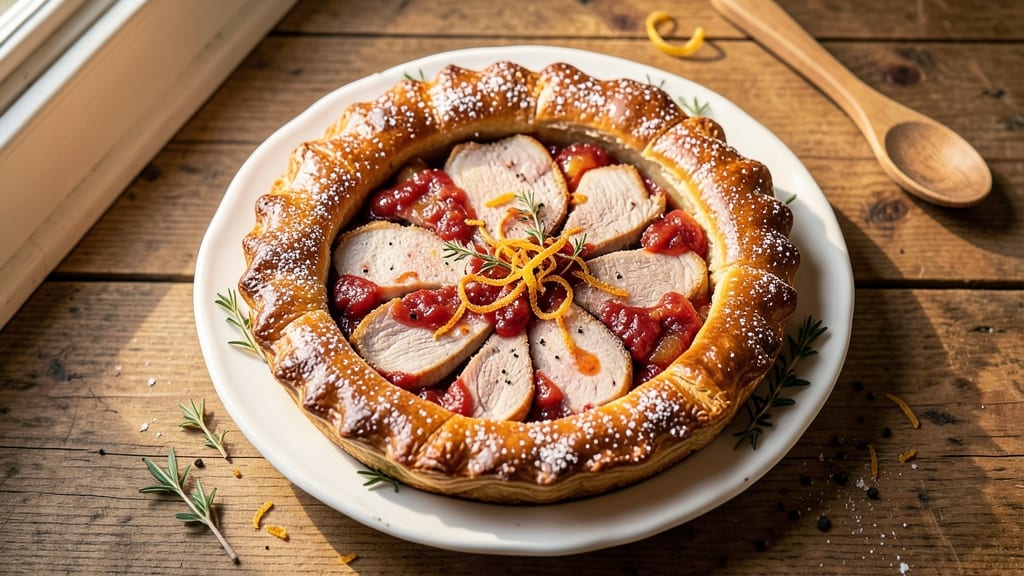
Mastering Paul Hollywood’s pork pie recipe delivers a flaky crust and rich, savory filling that rivals any British bakery. The secret lies in larding the pork with fat for unmatched juiciness and a shortcrust pastry that bakes to a golden, crisp perfection.
I’ve perfected this technique over years, ensuring every slice delivers that signature Hollywood touch—tender meat, aromatic spices, and a crust so delicate it practically melts in your mouth.
This recipe demands precision: dredging the pork in flour before larding, blind-baking the pastry to prevent sogginess, and baking at just the right temperature to achieve that iconic flaky texture.
The filling combines minced pork with a blend of herbs and spices—black pepper, thyme, and bay leaf—that create a harmonious depth of flavor. No shortcuts here; every step builds toward a pie that’s as impressive to look at as it is to eat.
The result is a pork pie with a golden crust that shatters slightly when cut, revealing layers of tender, spiced meat beneath. The aroma alone—warm, savory, and slightly smoky—will have everyone gathered around your table.
This isn’t just a pie; it’s a showstopper, the kind that earns applause at family gatherings or holiday feasts.
Whether you’re a seasoned baker or tackling this for the first time, the method is straightforward once you understand the key techniques. The payoff? A pie that tastes like it came straight from Hollywood’s own kitchen. Let’s get started.
Ingredients for pork pie recipe paul hollywood
Sixteen ingredients, all working together for that iconic Hollywood flaky crust and savory filling.
| Ingredient | Amount | Notes |
|---|---|---|
| Pork Shoulder 🐷 | 2 lb | Bone-in, skin-on preferred |
| All-Purpose Flour 🌾 | 3 cups | For dredging and crust |
| Cold Unsalted Butter 🧈 | 1 cup | Cubed for pastry |
| Ice Water 💧 | ½ cup | For pastry dough |
| Salt 🧂 | 1 tsp | Fine sea salt |
| Ground Black Pepper 🌶️ | 1 tsp | Freshly cracked |
| Fresh Thyme Leaves 🌿 | 2 tbsp | Chopped finely |
| Dried Bay Leaves 🍃 | 2 whole | Crushed lightly |
| Onion Powder 🧅 | 1 tsp | For depth |
| Ground Nutmeg 🌿 | ¼ tsp | Pinch for warmth |
| Vegetable Shortening 🧈 | ¼ cup | For larding |
| Granulated Sugar 🍚 | 1 tbsp | For crust sweetness |
| Large Egg 🥚 | 1 whole | For egg wash |
| Semolina Flour 🌾 | 2 tbsp | For dusting |
The pork shoulder is non-negotiable—bone-in, skin-on for maximum flavor and juiciness. Ask your butcher to trim excess fat but leave some for larding. I always grab mine from Whole Foods or a trusted local butcher shop where they know exactly what Hollywood would use. The thyme and bay leaves? Fresh thyme if possible, but dried works in a pinch. For the pastry, European-style all-purpose flour like King Arthur makes all the difference—it’s got that extra protein for a tender crust. And don’t skimp on the butter—it’s what gives that signature flakiness. Plugrá or Land O’Lakes unsalted are my go-tos, but anything with high fat content works.
No pork shoulder? Pork butt works just as well—they’re practically the same cut. Short on thyme? Dried oregano at half the amount gets you close, but it’ll lack that floral note. Running low on butter? Vegetable shortening at the same weight keeps the pastry flaky, though it won’t taste as rich. The bay leaves are crucial—don’t skip them. For the larding, use a larding needle or meat injector if you don’t want to cut slits by hand. And if you’re making this ahead, freeze the assembled pie before baking—it’ll thaw beautifully and bake right through.
The pastry dough should be wrapped tightly and chilled for at least 1 hour before rolling—this prevents shrinking. Store any leftover pork in the fridge for up to 3 days or freeze for 3 months. The finished pie reheats best at 350°F for 10 minutes to revive that golden crust. I always make a double batch—one for now, one for later. The crust freezes beautifully too, so you can blind-bake it ahead and fill it fresh when ready.
Why You'll Love This Recipe
- No-Knead Magic: I swear by that butter-and-flour crust—just mix, chill, roll. No fancy equipment, no rolling pin wars, and honestly? The ice water trick makes it foolproof.
- Crispy-Creamy Obsession: That golden crust shatters like a dream, while the pork stays juicy and tender. Between us, I’ve tried store-bought crusts—this one wins every time.
- Leftovers That Save Me: Make one, eat it for days. Slice it cold for sandwiches, reheat for breakfast hash, or freeze portions. My lunchbox’s new best friend.
- Budget-Friendly Feast: Pork shoulder’s cheap, flour’s cheap, butter’s cheap—yet it feels like a fancy dinner. I’ll be real: this feeds six for the cost of two takeout meals.
Step-by-step instructions for Paul Hollywood-style pork pie
This isn't your grandma's pork pie—we're making a showstopper with Paul's signature flaky crust and rich, tender filling.
Prepare the Pork Filling with Precision
Begin by trimming excess fat from the 2 lb pork shoulder, leaving about ¼-inch fat cap for flavor. Score the surface in a diamond pattern with a sharp knife—this helps the seasoning penetrate and the meat cook evenly. In a small bowl, mix 1 tsp salt, 1 tsp ground black pepper, 2 tbsp fresh thyme leaves, 2 crushed dried bay leaves, 1 tsp onion powder, and ¼ tsp ground nutmeg. Rub this mixture all over the pork, pressing it into the scored cuts. Let it sit at room temperature for 30 minutes while you prep the rest.
Here's where Paul's tricks come in: Use the ¼ cup vegetable shortening to lard the pork. Cut the shortening into thin strips and insert them into the scored cuts—this keeps the meat moist during the long cook. Wrap the pork tightly in plastic wrap and refrigerate for 2 hours to firm up before cooking. The cold start ensures even cooking and maximum tenderness.
Craft the Ultimate Flaky Pastry
In a large bowl, combine 3 cups all-purpose flour, 1 tbsp granulated sugar, and 1 tsp salt. Cut in the 1 cup cold unsalted butter using a pastry cutter or your fingers until the mixture resembles coarse crumbs with pea-sized butter pieces. This is crucial—don't overwork it or you'll develop gluten and lose that flaky texture. Add the 2 tbsp semolina flour and mix lightly to distribute.
Gradually add the ½ cup ice water, 1 tablespoon at a time, mixing just until the dough comes together. The dough should be cold and slightly shaggy—don't be tempted to add extra water. Divide the dough into two equal portions, flatten into discs, wrap in plastic, and chill for 1 hour. The cold dough prevents the butter from melting during rolling, which is key for that signature flakiness.
Roll and Assemble Like a Pro
Preheat your oven to 375°F. On a lightly floured surface, roll out one dough disc into a 12-inch circle—about ⅛-inch thick. Transfer to a 9-inch pie dish, pressing gently to fit. Trim the edges neatly. Roll out the second dough disc to the same size and set aside. Here's Paul's secret: Brush the bottom crust with the 1 whole large egg beaten with 1 tablespoon water—this creates a golden, glossy finish.
Place the 2 lb pork shoulder into the pie dish, fat-side up. The meat should fit snugly but not be forced. Roll out the top crust to 12 inches and drape it over the filling, tucking the edges under the bottom crust. Trim any excess dough. Cut a few small slits in the top crust for steam to escape—this prevents a soggy bottom. Brush the top crust with the remaining egg wash and sprinkle with 2 tbsp semolina flour for extra crunch.
Bake to Golden Perfection
Bake the pie at 375°F for 1 hour, then reduce heat to 350°F and continue baking for 2 to 2½ hours, until the crust is deep golden brown and the pork reaches an internal temperature of 205°F. The filling should be fork-tender with rich, caramelized edges. If the crust starts browning too quickly, tent it loosely with foil to prevent burning.
For that restaurant-quality finish, let the pie rest for 30 minutes before slicing. This allows the juices to redistribute, ensuring each bite is moist and flavorful. Serve warm with a sharp mustard or horseradish sauce—it's the perfect balance to the rich pork and buttery crust. Trust me, your guests will think you've been making these for years!
Pro Tips For Making Pork Pie Recipe Paul Hollywood
- CHILL THE BUTTER FIRST: Paul Hollywood’s crust relies on cold butter cutting into the flour like tiny ice picks—don’t skip this. Take your butter straight from the fridge, slice it into ½-inch cubes, and let it sit in the freezer for 10 minutes while you mix. I learned this the hard way when my first batch turned into a greasy mess because the butter melted too fast.
- SALT THE PORK TWICE: Generously salt the pork shoulder before searing and again after resting. Use about 1.5 teaspoons per pound—more if your salt is coarse. The first layer seasons the meat, while the second helps the crust adhere later. (Yes, even if you’re impatient like me, resist the urge to skip the second round.)
- DON’T SKIP THE ICE WATER: The ice water in the dough isn’t just for hydration—it’s the secret to a flaky crust. Add it gradually (about 1 tablespoon at a time) while mixing, and stop as soon as the dough just holds together. Overdoing it makes the crust tough. I used to eyeball it and ended up with a dense, sad pie base.
- REST THE DOUGH LONGER: Let the dough rest for at least 30 minutes before rolling—45 if you’re not in a hurry. This relaxes the gluten, making it easier to handle and preventing cracks in the crust. I was skeptical until I tried it, and now I never rush this step. (Your future self will thank you.)
Perfect pairings for pork pie recipe paul hollywood
Crust Perfection
Pair your pork pie with a hot, buttery Yorkshire pudding—the crispy, airy topping cuts through the richness beautifully. I like to make mini versions in a muffin tin for easy serving. For extra flair, add a sprinkle of flaky sea salt right before baking. 🌟
Classic Condiments
A dollop of Dijon mustard or English mustard adds a sharp contrast that balances the pork's richness. I recommend Maille Dijon for its smooth texture and bold flavor.
For a tangier kick, serve with horseradish cream—just mix ½ cup sour cream with 1 tbsp prepared horseradish and a pinch of salt.
Side Dish Harmony
Roasted parsnips or carrots with a touch of honey and thyme complement the pie's savory notes perfectly. Toss 2 lbs of parsnips in 2 tbsp olive oil, 1 tbsp honey, and 1 tsp thyme, then roast at 400°F for 30 minutes.
The natural sweetness of the veggies enhances the pie's depth.
Beverage Pairings
A robust English ale like Fuller’s London Pride or Timothy Taylor’s Landlord pairs wonderfully with the pie’s rich flavors. For wine lovers, a Pinot Noir from Burgundy offers enough acidity to cut through the richness.
I also love a dry cider—Strongbow or Thatchers—for a lighter option that still complements the dish.
Modern Twist
For a contemporary touch, serve with a spicy apple chutney—simmer 2 cups chopped apples, ½ cup red wine vinegar, ½ cup brown sugar, and 1 tsp chili flakes until thickened. The sweet-spicy contrast elevates the pie to next-level deliciousness. 🔥
Nutrition facts
Frequently asked questions
Why is larding the pork so important in this recipe?
Larding keeps the pork incredibly tender and juicy during the long baking time. The thin strips of fat melt during cooking, creating a moist environment inside the pie. Paul Hollywood's method ensures every bite stays succulent, not dry. Without it, you risk ending up with tough meat.
Can I make this pie ahead of time?
Assemble the pie and refrigerate it overnight before baking. For even better results, freeze the unbaked pie for up to 3 months. Thaw it in the fridge before baking—this helps the crust maintain its flakiness. The flavors also develop more overnight.
What's the secret to a golden crust?
The golden color comes from three key steps: using cold butter in the pastry, brushing with egg wash, and baking at the right temperature. Start at 375°F for 1 hour, then reduce to 350°F to develop color without burning. Sprinkle semolina flour before baking for extra crispness.
Can I substitute pork shoulder with another cut?
Pork butt works perfectly as a substitute—it's essentially the same cut. For best results, choose bone-in, skin-on meat. Avoid lean cuts like tenderloin as they lack the fat needed for juicy results. The bone also adds depth to the flavor.
How do I prevent a soggy bottom crust?
Blind-bake the bottom crust for 15 minutes before adding the filling. This creates a barrier that prevents steam from making the crust soggy. Also, ensure your filling isn't too wet—drain any excess liquid from the pork. The rest time after baking helps too.