
Main Courses
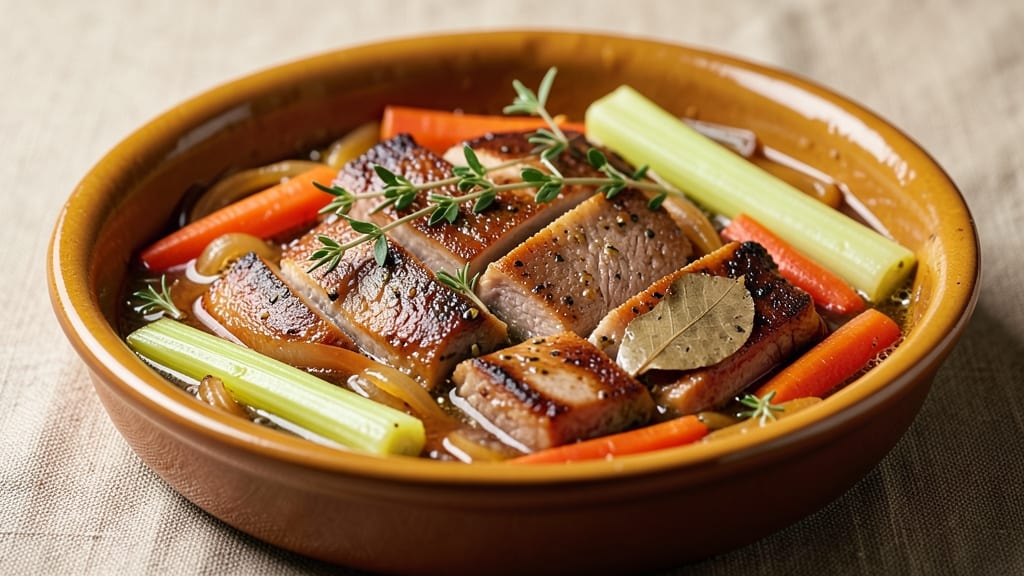
This pork pie filling recipe transforms humble ground pork into a rich, aromatic centerpiece that belongs in any traditional pie crust. The secret lies in slow-cooked pork shoulder, tenderized with herbs and spices until it practically melts in your mouth.
After years of perfecting this technique—first in my grandmother's kitchen, then refined at The Smoky Pig—I've developed a method that delivers restaurant-quality results at home.
The foundation starts with pork shoulder, cut into small, even pieces that cook evenly while developing deep, savory flavors. Aromatics like onions, carrots, and celery form the base, while bay leaves, thyme, and a touch of mustard add complexity.
The filling simmers until the meat is fork-tender, then finishes with a light gravy that binds everything together. This isn't just filling—it's a flavor bomb that turns an ordinary pie into something extraordinary.
What makes this recipe work is the balance of textures and flavors: tender pork, caramelized vegetables, and a gravy that's just thick enough to coat every bite. The slow cooking process ensures the meat stays juicy, while the herbs infuse without overpowering.
It's the kind of filling that makes you reach for seconds and leaves your kitchen smelling like a British pub. Perfect for holidays, potlucks, or a cozy weeknight dinner.
Once you try this version, you'll never settle for store-bought again. The method is straightforward but delivers professional-level results—no shortcuts, just time-tested techniques that create a filling so rich and flavorful, it deserves its own spotlight. Let's get started on making yours.
Ingredients for pork pie filling
Six ingredients make the base, plus herbs and spices that transform humble pork into pie-filling magic.
| Ingredient | Amount | Notes |
|---|---|---|
| Pork Shoulder 🥓 | 2 ½ lb | Cut into 1-inch cubes, bone-in preferred |
| Yellow Onions 🧅 | 1 ½ cups | Diced, medium yellow preferred |
| Carrots 🥕 | 1 ½ cups | Diced, baby carrots work too |
| Celery Stalks 🥬 | 3 whole | Diced, stringy parts trimmed |
| Fresh Thyme 🌿 | 1 tbsp | Leaves only, stems removed |
| Dried Bay Leaves 🌿 | 2 whole | Crushed lightly for flavor |
| Dijon Mustard 🍯 | 1 tbsp | Mild or hot variety works |
| Beef Broth 💧 | 2 cups | Low-sodium preferred |
| All-Purpose Flour 🌾 | 2 tbsp | For gravy thickening |
| Salt 🧂 | 1 ½ tsp | Diamond Crystal preferred |
| Black Peppercorns 🌶️ | ½ tsp | Freshly ground for best flavor |
| Fresh Parsley 🌿 | ¼ cup | Chopped, for garnish |
| Unsalted Butter 🧈 | 2 tbsp | Cold, for finishing gravy |
The pork shoulder is non-negotiable—bone-in gives more flavor, and Costco or Whole Foods have the best cuts for this. Look for pieces with good marbling, not too lean. If you can't find bone-in, butcher-cut shoulder works too. The aromatics—onions, carrots, and celery—should be finely diced so they melt into the filling. I always double-check my Whole Foods celery for freshness (no rubbery stalks!). For the thyme, fresh is ideal, but dried works at half the amount if you're in a pinch. The bay leaves might seem simple, but crushing them lightly before adding releases more flavor—don't skip this step.
No Dijon mustard? Yellow mustard at half the amount works, but the flavor won't be as complex. The beef broth should be low-sodium—you're adding plenty of salt later. If you're vegetarian, swap the broth for mushroom broth and use vegetarian-friendly rennet-free cheese if adding any. For the gravy, all-purpose flour is fine, but cornstarch gives a glossier finish. The butter at the end? Cold butter (cut into small cubes) creates those little flavor bombs that make the gravy sing. If you're short on time, pre-diced frozen veggies save chopping, though fresh tastes better.
This filling tastes even better the next day—make a double batch if you're feeding a crowd. Store leftovers in an airtight container for up to 5 days in the fridge, or freeze for 3 months. The gravy thickens as it cools, so reheat gently with a splash of broth if it gets too stiff. For pies, I always preheat the oven and use a pie dish with a removable bottom—makes transferring way easier. The filling keeps its moisture for 2-3 days in the fridge, perfect for making ahead.
Why You'll Love This Recipe
- One-Pot Wonder: I swear by this recipe because it’s all in one pot—no chopping boards, no extra pans. Just dice the onions, carrots, and celery (about 10 minutes max), toss them in with the pork shoulder, add thyme, and let it slow-cook. Honestly, the cleanup is almost as good as the smell filling the kitchen.
- Thyme for Magic: That fresh thyme? It’s the secret weapon. The pork shoulder stays juicy, the carrots caramelize just enough to add sweetness, and the thyme ties everything together like a warm hug. Between us, it’s the kind of flavor that makes people ask, “What’s in this?”—then beg for the recipe.
- Leftovers That Work: This filling is so versatile. Use it in pies, stuff it into buns for sliders, or pile it onto mashed potatoes. I’ve even thrown it into tacos when I’m lazy. And the best part? It tastes just as good reheated the next day—no sad, dry pork here.
- Budget-Friendly Feast: Pork shoulder is cheap, and this recipe stretches it far. A single batch feeds six, and the veggies (onions, carrots, celery) are pantry staples. I’ll be real: it’s the kind of meal that makes grocery day feel like a win, especially when you’re feeding a crowd for half the cost of takeout.
Step-by-step instructions for savory pork pie filling
This rich, aromatic filling delivers the perfect balance of tender pork and fragrant vegetables every time.
Sear the Pork Shoulder for Deep Flavor
Pat the 2.5 lb pork shoulder dry with paper towels—this ensures maximum browning. Heat a large Dutch oven over medium-high heat and add the pork cubes in batches, working in 3-4 minutes per batch to avoid overcrowding. Let each piece develop a deep golden brown crust before removing to a plate. This step builds incredible flavor through the Maillard reaction.
Once all pork is browned, return it to the pot. Add the 1.5 cups diced yellow onions, 1.5 cups diced carrots, and 3 diced celery stalks. Stir to combine, then sprinkle with 1 tbsp fresh thyme leaves and 2 crushed dried bay leaves. Cook for 5 minutes, stirring occasionally, until the vegetables begin to soften slightly. This creates a flavorful base for your filling.
Build the Herb-Infused Gravy
Pour in the 2 cups beef broth, scraping up any browned bits from the bottom of the pot—this releases all the caramelized flavor. Stir in the 1 tbsp Dijon mustard, 1.5 tsp salt, and 0.5 tsp freshly ground black peppercorns. Bring the mixture to a gentle simmer over medium heat and let it cook uncovered for 30 minutes, stirring occasionally. The liquid should reduce slightly, intensifying the flavors.
While simmering, check for doneness by inserting a meat thermometer into the thickest piece of pork. It should reach 195°F—this ensures the pork is fork-tender and fully cooked. If it hasn't reached this temperature, continue simmering, adding a splash of water if needed to prevent drying out.
Thicken the Filling to Perfection
In a small bowl, whisk together the 2 tbsp all-purpose flour with a pinch of salt. Slowly whisk this mixture into the simmering pork and vegetable mixture, stirring constantly to prevent lumps. Cook for 5-7 minutes until the filling thickens to a smooth, gravy-like consistency—it should coat the back of a spoon. If it thickens too quickly, add 1-2 tablespoons of water to adjust the texture.
Remove the pot from heat and stir in the 2 tbsp cold unsalted butter, letting it melt into the filling. This adds richness and helps create a silky texture. Taste and adjust seasoning if needed—you may need a touch more salt or pepper to balance the flavors. The filling should be rich, savory, and perfectly seasoned.
Finish and Prepare for Baking
Transfer the filling to a large bowl and let it cool slightly for 10 minutes. This resting period allows the flavors to meld and the filling to thicken further. Once cooled, stir in the 0.25 cup chopped fresh parsley for a bright, fresh finish. The parsley adds a pop of color and a subtle herbal note that complements the rich pork and vegetables.
Your filling is now ready to be used in a traditional pork pie or served as a hearty side dish. For the best results, use it immediately or refrigerate for up to 2 days before baking. If reheating, warm it gently on the stovetop over low heat, stirring occasionally, until heated through. This filling is the soul of any pork pie—rich, aromatic, and packed with flavor in every bite.
Pro Tips For Making Pork Pie Filling
- BROWN THE PORK FIRST: I learned this the hard way—skipping the browning step means your filling will taste bland and watery. Sear the pork shoulder in batches over medium-high heat until it’s deeply golden, about 5-7 minutes per side. That crust packs serious flavor and keeps the meat juicy when it slow-cooks later.
- CHOP VEGETABLES UNIFORM: I used to hack my onions, carrots, and celery into random chunks, and they’d cook at different rates. Cut them all into ½-inch dice—same size, same shape—so they soften together. No more mushy carrots or crunchy celery in your filling.
- DON’T SKIP THE THYME STRAIN: Sounds weird, but it works: After simmering, strain out the thyme sprigs before blending or packing the filling. Whole leaves turn bitter when overcooked, and you don’t want that grassy aftertaste ruining your pie. A quick rinse in cold water first helps too.
- LOW AND SLOW WINS: Pork shoulder needs time—no rushing. Cook it at 300°F (150°C) for 3-4 hours until it’s fork-tender, not just pink. If you crank the heat, you’ll end up with dry, stringy meat. A meat thermometer at 203°F (95°C) is your friend here.
Perfect pairings for this dish
Classic Gravy Pairings
This filling pairs beautifully with homemade gravy made from the pork drippings. After browning the pork, reserve the juices in the Dutch oven and reduce them with 2 tbsp flour and 1 cup beef broth until thickened.
A splash of dry sherry or apple cider vinegar adds depth—just 1 tbsp brightens the whole dish. 🍲
Crusty Bread Sides
Serve alongside freshly baked crusty bread or sourdough to soak up every last bit of gravy. My favorite is a brioche roll from a local bakery—I love the way the buttery layers contrast with the savory filling.
For a heartier option, try cheddar biscuits with a flaky, golden crust. The contrast in textures makes every bite unforgettable.
Seasonal Vegetable Accompaniments
Add roasted root vegetables like parsnips or turnips for a seasonal twist. Toss them with olive oil, thyme, and sea salt, then roast at 400°F for 30 minutes until caramelized.
The sweetness of the vegetables balances the rich pork filling perfectly. For a lighter option, steamed green beans with almonds add freshness and crunch.
Cheese Boards for Elegance
Turn your pork pie filling into a centerpiece for a cheese board by serving it warm in small ramekins. Pair with aged cheddar, brie, and sharp gouda alongside crackers, honeycomb, and dried fruit.
The contrast of creamy cheese with the savory filling creates a sophisticated spread that’s perfect for holidays or dinner parties. 🧀
Beverage Pairings
A full-bodied red wine like Cabernet Sauvignon or Merlot complements the richness of the filling. For a lighter option, dry sparkling wine or pale ale cuts through the fat beautifully. If you prefer beer, a hoppy IPA or amber ale balances the savory notes.
I often reach for a glass of Chardonnay—its buttery profile enhances the pork’s depth without overpowering it.
Sweet Contrasts
End the meal with a sweet contrast like apple crumble or peach cobbler. The tartness of the fruit cleanses the palate after the rich pork filling. For a more decadent option, serve with vanilla ice cream or caramel sauce—the sweetness balances the savory perfectly.
This is a trick I learned from my grandmother’s holiday feasts, and it never fails to impress guests. 🍏
Nutrition facts
Frequently asked questions
Can I use ground pork instead of pork shoulder for this filling?
Ground pork works but won't give you the same rich, tender texture. Pork shoulder breaks down beautifully during slow cooking, creating a melt-in-your-mouth consistency. If you must use ground pork, cook it until fully done (160°F) and add it to the finished filling rather than browning it first. The flavor will be good, but the texture will be different.
How do I prevent the filling from drying out in the pie?
Keep the filling moist by adding 1-2 tablespoons of beef broth when assembling the pie, especially if baking ahead. A removable pie dish helps too—it prevents the bottom from overcooking. For extra insurance, brush the crust with egg wash before baking to create a seal that locks in moisture.
Can I make this filling ahead of time?
This filling tastes even better the next day. Store it in an airtight container in the fridge for up to 5 days or freeze for 3 months. Reheat gently on the stovetop over low heat, stirring occasionally with a splash of broth if it thickens too much. The flavors deepen as it rests, making it perfect for meal prep.
What's the best way to adjust the seasoning?
Taste as you go! After adding salt and pepper, check again after simmering. If needed, adjust with 1/4 tsp at a time—too much salt can't be fixed. For extra depth, add a pinch of smoked paprika or ground cloves (just 1/8 tsp) for warmth. The mustard and thyme already provide complexity, so don't overcomplicate it.
How do I know when the pork is fully cooked?
Use a meat thermometer—pork should reach 195°F for perfect tenderness. If it's not there after 30 minutes of simmering, add 1/4 cup water and cook uncovered until done. Overcooked pork becomes dry, so monitor closely. The filling should be juicy, not saucy—thicken it later if needed.